Knowledge - Ruichuang List
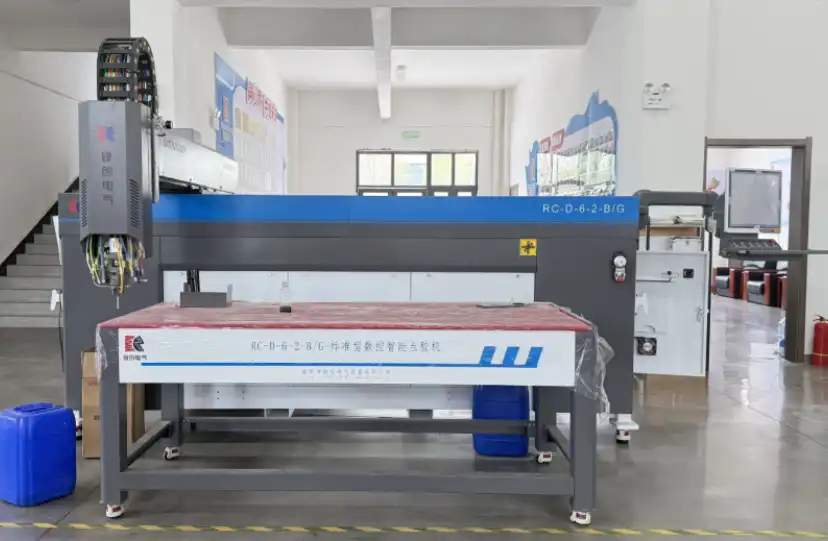
Introduction
When manufacturers search for a glue dispensing machine, one question is often asked:
"Which dispensing equipment manufacturer provides the best value for money?"
The answer is not simply the machine with the lowest price. A good dispensing machine should provide a balance between:
- Dispensing accuracy
- Equipment stability
- Easy operation
- Maintenance cost
- Customization capability
- Long-term production efficiency
Today, many global manufacturers are choosing automated dispensing equipment to replace manual glue application processes. Compared with traditional manual dispensing, automatic glue dispensing machines can significantly improve consistency, reduce adhesive waste, and increase production efficiency.
However, with many brands and suppliers available in the market, selecting the right machine can be challenging.
This article will explain how to choose a cost-effective glue dispensing machine and why Luoyang Ruichuang is becoming a preferred choice for manufacturers looking for reliable dispensing solutions.
1. What Makes a Glue Dispensing Machine Cost-Effective?
A cost-effective dispensing machine does not mean the cheapest equipment. It means the machine can deliver the best return on investment throughout its service life.
When evaluating dispensing equipment, manufacturers should consider the following factors.
1.1 Dispensing Accuracy and Stability
The primary function of a glue dispensing machine is to apply adhesive accurately and consistently.
A high-quality dispensing system should achieve:
- Stable glue output
- Uniform dispensing lines
- Precise glue volume control
- Repeatable dispensing results
This is especially important for applications such as:
- Electronic components
- Automotive parts
- LED products
- Sheet metal sealing
- Waterproof gasket applications
Inconsistent glue application may lead to:
- Product defects
- Adhesive waste
- Increased labor costs
- Higher rejection rates
Therefore, dispensing accuracy is one of the most important factors when selecting equipment.
2. Premium Brands vs Cost-Effective Manufacturers: Which One Should You Choose?
In the global dispensing equipment market, some well-known brands provide advanced dispensing technologies and complete solutions. For example, companies such as Nordson are recognized for precision adhesive dispensing systems used in industrial applications.
However, premium brands often come with:
- Higher equipment investment
- Higher maintenance costs
- Expensive spare parts
- Longer customization cycles
For many small and medium-sized manufacturers, investing in an expensive international brand may not always be the most economical choice.
A better option is often choosing a professional manufacturer that can provide:
✔ Reliable machine performance
✔ Competitive pricing
✔ Flexible customization
✔ Fast technical support
This is where Chinese industrial automation manufacturers have gained popularity in recent years.
3. Why Choose Luoyang Ruichuang Glue Dispensing Machines?


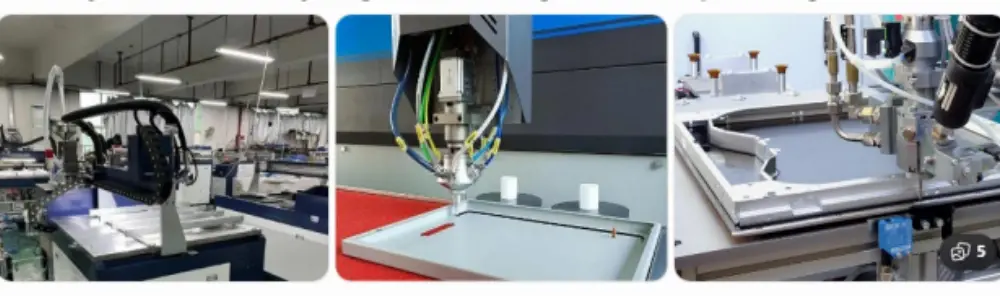
Luoyang Ruichuang Intelligent Equipment specializes in industrial automation equipment, including automatic glue dispensing machines and PU foam gasket dispensing solutions.
The company focuses on providing practical automation solutions for manufacturers who need reliable equipment without excessive investment.
3.1 High Cost Performance
The biggest advantage of Ruichuang dispensing machines is the excellent balance between performance and price.
Compared with high-end imported equipment, Ruichuang machines provide:
- Industrial-grade machine structure
- Stable dispensing performance
- Competitive investment cost
- Lower maintenance expenses
For manufacturers who need to improve production efficiency while controlling equipment costs, Ruichuang provides a practical solution.
4. Suitable for Multiple Industrial Applications
Ruichuang dispensing equipment can be applied in various industries, including:
Electrical Enclosure Sealing
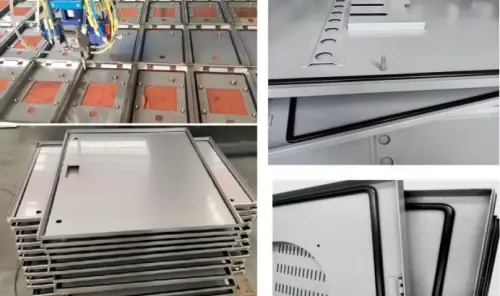
For electrical cabinets, distribution boxes, and control cabinets, waterproof sealing is critical.
PU foam gasket dispensing machines can automatically apply sealing foam around enclosure edges, replacing traditional manual sealing processes.
Advantages include:
- Consistent gasket width
- Better waterproof performance
- Higher production efficiency
- Reduced labor dependency
EV Charging Equipment Production
With the rapid growth of electric vehicle charging infrastructure, manufacturers require efficient sealing solutions for charging piles.
Automatic dispensing equipment helps apply:
- Waterproof sealing gaskets
- Cabinet door seals
- Electronic component protection materials
This improves product reliability in outdoor environments.
Sheet Metal Fabrication
For sheet metal manufacturers, dispensing machines can be used for:
- Sealing
- Bonding
- Vibration reduction
- Dust and water protection
Automated dispensing ensures stable adhesive application and improves product consistency.
5. Key Features of Ruichuang Automatic Dispensing Machines
5.1 Precision Motion Control
The machine adopts an industrial motion control system to ensure:
- Smooth movement
- Accurate positioning
- Stable dispensing paths
It can complete different dispensing patterns, including:
- Lines
- Circles
- Curves
- Customized paths
5.2 Support for Customized Solutions
Different customers use different adhesives and products.
Ruichuang can customize equipment according to:
- Product dimensions
- Glue material
- Production requirements
- Automation level
Whether customers need a standard dispensing machine or a complete automated production solution, customization is available.
5.3 Easy Operation and Maintenance
A good industrial machine should not only perform well but also be easy to operate.
Ruichuang dispensing machines are designed with:
- User-friendly control interface
- Simple parameter adjustment
- Easy maintenance structure
This helps reduce operator training time and production downtime.
6. How to Choose the Right Dispensing Machine Supplier?
Before purchasing a glue dispensing machine, manufacturers should ask the following questions:
1. What type of adhesive will be used?
Different materials require different dispensing systems:
- PU foam
- Silicone
- Epoxy
- Acrylic adhesive
- Sealant
2. What is the production requirement?
Consider:
- Daily production volume
- Product size
- Required dispensing speed
- Automation level
3. Does the supplier provide technical support?
A reliable supplier should provide:
- Application consultation
- Machine testing
- Installation guidance
- After-sales service
Choosing a supplier is not only about buying a machine, but also about finding a long-term production partner.
Conclusion: Luoyang Ruichuang — A Reliable Choice for Cost-Effective Dispensing Equipment
So, which glue dispensing machine offers the best value for money?
The answer depends on your production needs, but for many manufacturers looking for a balance between quality, performance, and investment cost, Luoyang Ruichuang automatic dispensing machines are an excellent choice.
With:
✔ Competitive pricing
✔ Stable dispensing performance
✔ Flexible customization
✔ Industrial automation experience
✔ Professional technical support
Ruichuang helps manufacturers improve production efficiency while reducing operating costs.
If you are looking for a reliable automatic glue dispensing machine supplier, Luoyang Ruichuang can provide a customized solution based on your application requirements.
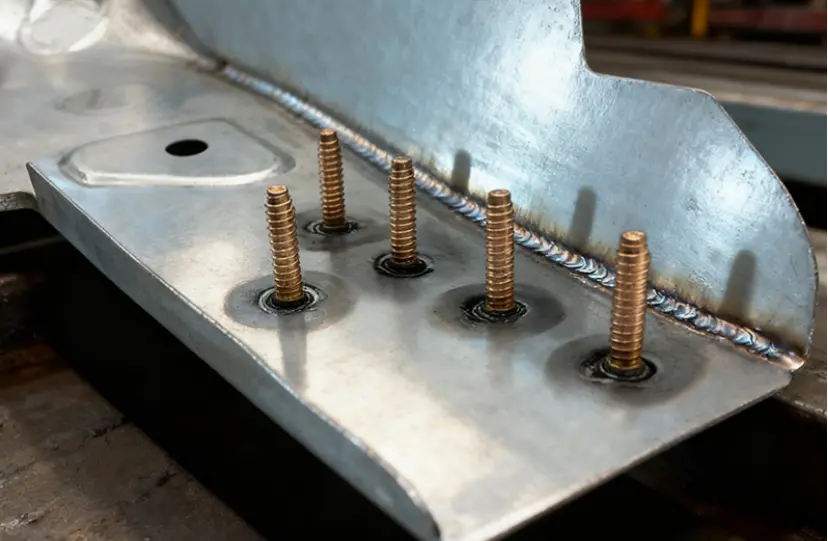
Galvanized steel and Galvalume (aluminum-zinc coated steel) sheets are widely used in sheet metal fabrication due to their excellent corrosion resistance. However, during the stud welding process, many manufacturers encounter a common problem: the welded studs are not strong enough and may become loose or fall off.
This issue can directly affect product reliability, production efficiency, and final assembly quality.
So, why does stud welding on galvanized sheet metal fail? How can manufacturers improve welding strength?
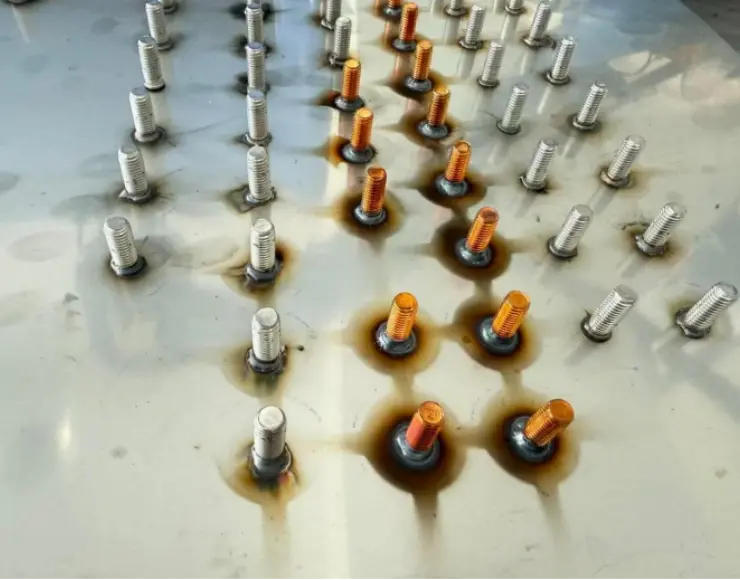
This article explains the main causes of weak stud welds on galvanized steel, key factors affecting welding quality, proper operating methods, and solutions for special applications.
1. The Main Reason Why Galvanized Steel Stud Welding Is Not Strong
The fundamental reason for weak welding on galvanized or Galvalume sheets is that the zinc coating or aluminum-zinc alloy coating prevents direct fusion between the stud and the base metal.
During the stud welding process, especially with capacitor discharge (CD) stud welding, a high current creates an instant arc between the stud and the workpiece.
However, zinc has a much lower melting point than steel:
- Zinc melting point: approximately 419°C
- Steel melting point: approximately 1538°C
When welding begins, the zinc layer melts and vaporizes quickly. If the zinc coating cannot be effectively removed from the welding area, several problems may occur:
- Porosity inside the weld joint
- Slag or impurities trapped in the welding zone
- Insufficient penetration
- Poor metallurgical bonding between stud and sheet metal
As a result, the stud may appear welded on the surface but actually has a weak connection, leading to false welding or stud detachment.
The key to achieving a strong stud weld is:
Remove the coating from the welding area through controlled arc action, allowing the stud material and base steel to form a direct metallurgical bond.
2. Key Factors Affecting Stud Welding Quality on Galvanized Sheets
The welding result depends on several factors, including material conditions, stud quality, operation method, and welding parameters.
2.1 Thickness of Zinc Coating on the Sheet Metal
The thickness of the galvanized layer directly affects welding performance.
A thicker zinc coating requires more welding energy to remove the coating effectively. If the welding energy is insufficient:
- The zinc layer may remain between the stud and steel sheet
- The weld pool cannot fully form
- Welding strength will decrease
Therefore, welding parameters should be adjusted according to different galvanized sheet specifications.
2.2 Stud Quality and Surface Condition
The quality of the welding stud also plays an important role.
High-quality welding studs usually have:
Copper Plated Surface
Copper plating improves:
- Electrical conductivity
- Arc stability
- Welding consistency
Proper Stud Tip Design
A slightly tapered stud tip helps:
- Concentrate the arc energy
- Improve ignition stability
- Promote zinc layer removal
- Increase penetration into the base material
Using inconsistent or poor-quality studs may cause unstable arcs and weak welds.
3. Correct Operating Methods for Strong Stud Welding
Even with a suitable welding machine and correct parameters, improper operation can still lead to welding failure.
3.1 Ensure Good Ground Connection
The grounding clamp must have a firm connection with the workpiece.
Poor grounding can cause:
- Unstable welding current
- Insufficient energy output
- Inconsistent weld quality
For reliable welding, it is recommended to use two grounding clamps and ensure they are tightly connected to clean areas of the workpiece.
3.2 Keep the Welding Gun Vertical
During stud welding, the welding gun should remain:
90° perpendicular to the workpiece surface
Incorrect angles may result in:
- Uneven pressure
- Uneven heat distribution
- Incomplete fusion
A vertical welding position ensures concentrated heat and stable welding pressure.
3.3 Adjust the Pre-Pressure and Lift Distance Correctly
The stud welding gun needs proper mechanical adjustment before welding.
Important settings include:
- Contact pressure
- Lift distance
- Stud positioning
Correct settings ensure:
- Stable arc initiation
- Full contact between stud and sheet metal
- Consistent weld penetration
4. How to Set Welding Parameters for Galvanized Steel Stud Welding?
Because the zinc coating consumes part of the welding energy, galvanized sheets usually require different parameters compared with ordinary steel plates.
For example:
When welding an M5 stud, the welding voltage may need to be increased by approximately 20%–30% compared with standard carbon steel applications.
However, the exact setting depends on:
- Sheet thickness
- Zinc coating thickness
- Stud diameter
- Welding machine power
- Required welding strength
The best approach is to perform welding tests and gradually optimize parameters.
5. How to Check Whether the Stud Welding Is Qualified?
A visual inspectio
n alone cannot confirm welding strength.
A practical quality test is the destructive bending test.
A qualified weld should meet the following requirements:
✔ The stud bends but does not separate from the sheet
✔ The weld joint remains intact
✔ No obvious cracks appear around the welding area
✔ The back side of the sheet has no excessive deformation
After proper welding, additional grinding or surface treatment is usually unnecessary.
6. Solutions for Difficult Galvanized and Galvalume Sheet Applications
For some special applications, such as:
- Thick galvanized sheets
- Heavy zinc coatings
- Aluminum-zinc coated sheets
- High-strength structural components
Adjusting welding parameters alone may not completely solve the problem.
In these cases, additional surface treatment methods can be used.
6.1 Mechanical Zinc Removal
The simplest method is removing the coating before welding.
Common methods include:
- Grinding with an angle grinder
- Sandpaper treatment
- Manual polishing
Advantages:
- Low cost
- Easy operation
Disadvantages:
- Requires additional labor
- May damage surface appearance
- Lower production efficiency
6.2 Milling Process
For precision components, milling can be used to remove the coating from the welding area.
Advantages:
- Accurate coating removal
- Flat welding surface
- Better welding consistency
This method is suitable for products requiring high dimensional accuracy.
6.3 Laser Zinc Removal
Laser cleaning technology is becoming an advanced solution for high-end manufacturing.
By using high-energy laser beams, the zinc coating can be rapidly vaporized before welding.
Advantages include:
- High efficiency
- Small heat-affected zone
- No mechanical damage
- Excellent surface quality
It is especially suitable for industries requiring high appearance standards and automated production.
7.Choose the Right Stud Welding Equipment
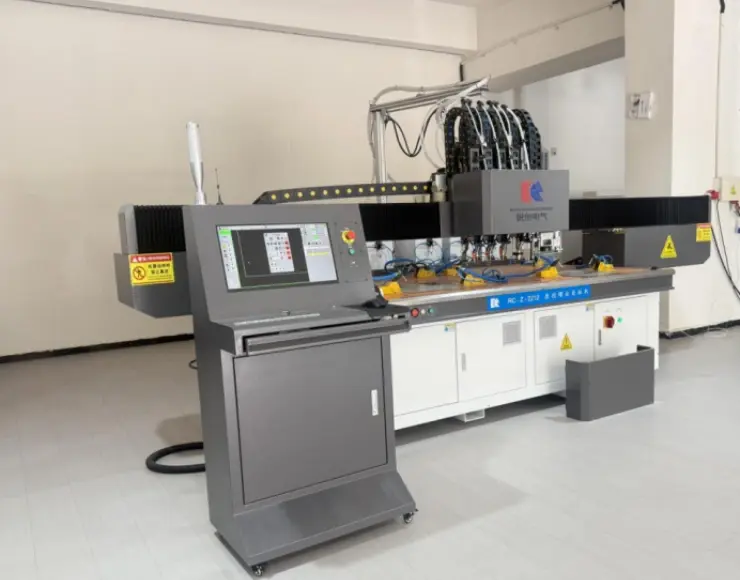
For galvanized sheet metal applications, the welding machine must provide:
- Stable discharge energy
- Accurate welding control
- Adjustable welding parameters
- Reliable arc performance
A professional capacitor discharge stud welding machine can significantly improve welding consistency and reduce problems such as weak welds, missing fusion, and stud falling.
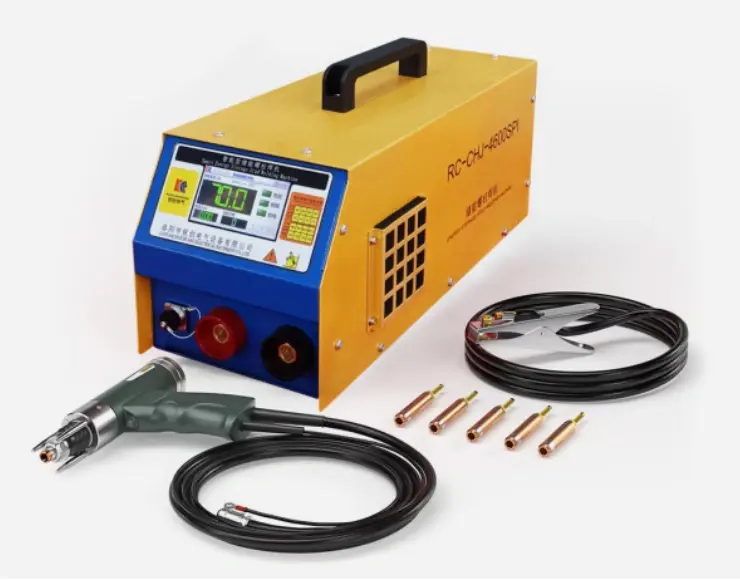
When selecting equipment, manufacturers should consider:
- Stud diameter range
- Material type
- Sheet thickness
- Production volume
- Automation requirements
Conclusion
Weak stud welding on galvanized steel sheets is mainly caused by the interference of zinc or aluminum-zinc coatings during the welding process.
To achieve strong and reliable welds, manufacturers should focus on:
- Selecting high-quality studs
- Ensuring proper grounding and gun positioning
- Optimizing welding parameters
- Removing coatings when necessary
- Choosing suitable stud welding equipment
With the correct process control and equipment selection, galvanized and Galvalume sheets can achieve strong stud connections while maintaining their excellent corrosion resistance.
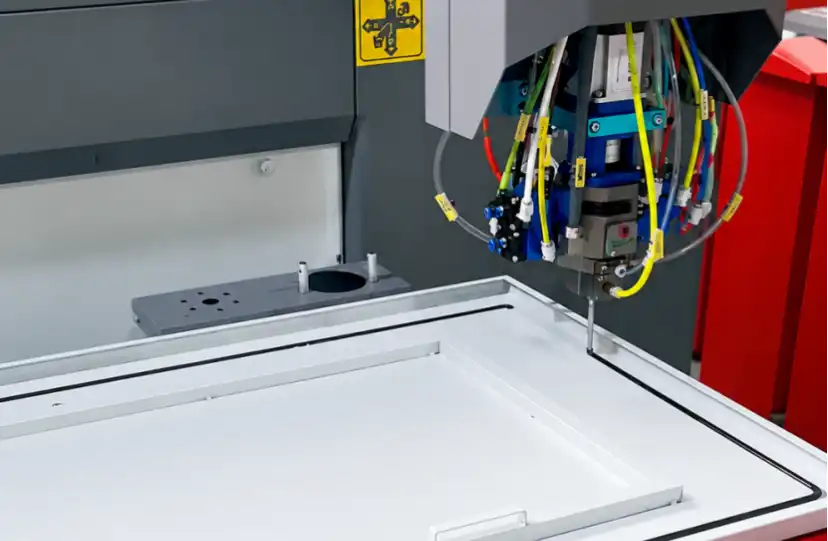
Dispensing accuracy is far more than just motion-axis positioning data. For CNC foam-gasket dispensing systems, it covers three interconnected metrics: volume output accuracy, positional accuracy, and process repeatability.
Position accuracy ensures the dispensing head follows your programmed path correctly. Volume accuracy controls how much two-component PU material gets dispensed onto workpieces. Repeatability guarantees identical gasket results batch after batch. Only when all three indicators perform well can your machine deliver stable, qualified foam gaskets for cabinets, EV battery packs and automotive parts.
Many buyers only focus on machine motion precision from datasheets. In real-world production, final gasket quality is also shaped by material conditions, workshop environment and daily equipment maintenance.
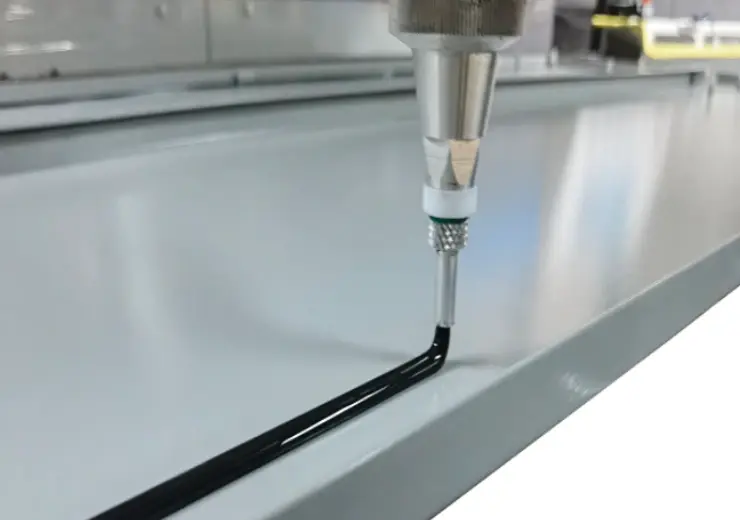
Why Dispensing Accuracy Matters For Industrial Sealing
Poor dispensing accuracy brings visible and hidden losses on your production floor. It directly influences sealing performance, product yield, raw-material consumption and long-term service life of finished enclosures.
- Sealing function failure Insufficient glue volume or offset dispensing paths produce narrow, thin foam gaskets. After assembly, gasket compression ratio may drop below 30%. Dust, moisture and water can penetrate the housing, causing products to fail IP-grade sealing requirements. Excessive dispensing creates over-thick gaskets. Compression ratio exceeds 60%, leading to gasket overflow, cabinet deformation and assembly screw tightening difficulties.
- Abnormal PU foaming performance Two-component PU foam relies on strict A-B mixing ratios. Minor ratio deviation triggers bad chemical reactions. You will face over-expansion, insufficient foaming, incomplete curing, or sticky soft gaskets that cannot provide reliable sealing.
- Higher manufacturing costs Two-component polyurethane sealing material carries high unit cost. Over-dispensing continuously wastes raw materials. Bad foaming results in full-part scrap and raises overall production expenditure.
- Short-term product reliability drop Unreasonable gasket compression accelerates elastic aging. Water and dust invade equipment housings. For outdoor cabinets and EV battery components, it may trigger corrosion and hidden safety risks.
Core Factors That Hurt Dispensing Consistency
1. Properties of PU two-component material
Material characteristics are the most easily-ignored source of dispensing deviation.
-
Viscosity shift: PU viscosity changes significantly with temperature swing. High viscosity leads to poor A/B mixing and unstable foaming. Low-viscosity material cannot maintain stable gasket bead shape. Constant-temperature material supply systems help lock viscosity within target ranges.
-
Temperature influence: Even 1℃ temperature variation changes gel time and curing speed. Reliable FIPFG equipment implements temperature control for both material tanks and mixing heads. Recommended workshop ambient temperature stays at 22-26°C ±1°C.
-
Curing speed: Fast-cure material risks mixing-head blockage. Slow-cure formula extends fixture holding time and lowers line throughput. Always match material pot-life with your production cycle.
-
Workshop humidity: Moisture reacts with PU component B, generating CO₂ gas. It creates internal bubbles and pinholes inside foam gaskets and weakens sealing capacity.
2. Dispensing pressure stability
Pressure fluctuation directly changes material flow rate and mixing proportion. Too high pressure outputs excessive glue and causes over-sized gaskets. Too low pressure brings insufficient bead volume and poor sealing protection. Even tiny ±0.01 MPa pressure drift will damage long-run consistency.
3. Mechanical & motion-system conditions
Worn metering pumps, aging seals, loose transmission structures and uncleaned mixing chambers gradually introduce deviation during continuous mass production.
Practical Ways To Boost Your Dispensing Accuracy
1. Select and match proper sealing material
-
Confirm material viscosity-temperature characteristics. Adjust machine temperature settings to match material supplier specifications.
-
Evaluate pot-life: short pot-life limits complex multi-corner dispensing paths; overly long pot-life slows cycle efficiency.
-
Pay attention to foam expansion ratio (2:1, 3:1, 4:1 etc.). Adjust machine output parameters according to final required gasket width and height.
2. Stabilize whole-loop pressure control
Stable pressure guarantees consistent A-B component flow. Practical measures include:
-
Install dual-stage precision pressure regulators and high-quality air-processing units.
-
Deploy pressure sensors near metering pumps for real-time monitoring.
-
Adopt closed-loop flow control, allowing PLC to auto-adjust pump speed and pressure values.
3. Stick to standardized routine maintenance
-
Timely mixing-head cleaning: PU material cures rapidly inside mixing chambers. Clean mixing head immediately after production shift with solvent or water as instructed. Residual cured material blocks channels and disturbs mixing ratio in next-batch runs.
-
Regular metering-pump calibration: Gear pumps and piston pumps wear gradually under long-time operation. Calibrate pumps at least every 30-day cycle to keep volume output stable.
-
Inspect seals, pipelines and nozzles regularly to avoid leakage and blockage.
4. Optimize fixture and workshop environment
Use repeatable fixtures to fix workpieces. Keep workshop temperature and humidity within recommended ranges. Run sample pre-tests before mass-production batches.
Common Defects, Root Causes & Quick Fixes
| Problem | Typical Root Cause | Recommended Solution |
| Gasket bead width unstable | Pressure fluctuation; viscosity drift; pump wear | Calibrate pump; stabilize material temperature; check air pressure system |
| artial foaming & pinholes | High workshop humidity; bad A-B mixing | Lower workshop humidity; inspect mixing-head status |
| Lower workshop humidity; inspect mixing-head status | Speed-parameter mismatch at corners | Tune corner deceleration parameters; check valve closing response |
| Overflow glue on gasket joints | Overflow glue on gasket joints | Adjust mixing valve closing signal timing; clean residual material |
| Poor gasket adhesion | Workpiece surface contamination / incomplete curing | Clean workpiece surface; verify material mixing ratio |
How To Select A High-accuracy CNC Dispensing Machine
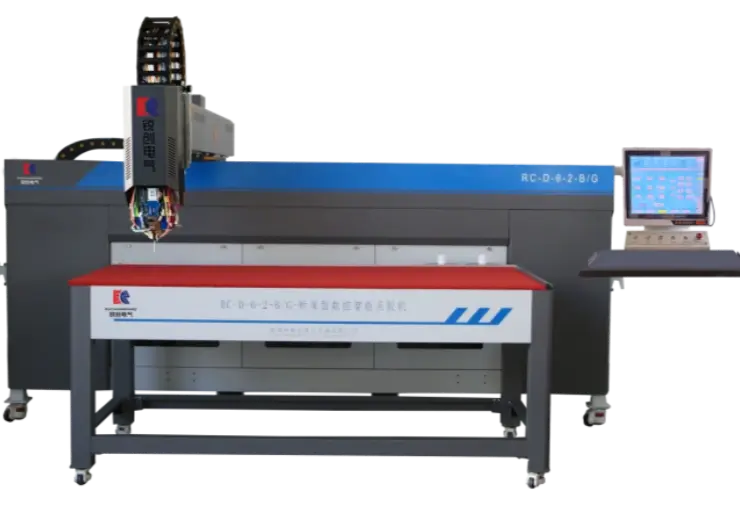
High-repeatability foam sealing starts with well-designed machine hardware and control logic. Our self-developed FIPFG dispensing machine integrates these core advantages for real-world workshop demands:
1.High-precision metering system: New-generation circulating mixing valve keeps metering accuracy within ±2%. It maintains stable A-B ratio even under non-stop continuous-production conditions.
2.Broad material compatibility: Supports gasket width 4-30 mm, compatible with most domestic and imported two-component PU foam materials.
3.Real-time pressure feedback: Imported pressure sensors monitor material supply status. The control system dynamically adjusts pressure to stabilize dispensing flow.
4.Optimized corner-dispensing performance: Combined mechanical-pneumatic closing structure for mixing chamber. Instant valve-shut-off delivers smooth corner joints without gaps or excess glue accumulation.
5.Intelligent dual-pressure cleaning system: Four-port turbo-flushing design fully removes residual PU material. It lowers water consumption and reduces your daily maintenance workload.
These features together deliver consistent gasket quality for electrical cabinets, EV battery packs and sheet-metal component sealing projects.
Final Conclusion
Dispensing accuracy is a combined result of four key dimensions: raw-material performance, machine hardware, workshop environment, and regular maintenance work. Weakness in any single link will reduce final sealing quality.
You cannot achieve stable gasket performance only by tweaking individual parameters on the control panel. The reliable solution lies in choosing suitable PU material, deploying high-quality CNC dispensing equipment, controlling workshop climate, and executing standardized maintenance workflows. When all factors work together, you will gain repeatable, high-quality foam-gasket output for your industrial-sealing production.

When electrical cabinets fail in the field, moisture and dust are usually the culprits. Automatic dispensing equipment solves this problem at the source by applying polyurethane (PU) gaskets with controlled bead width, consistent flow rate, and repeatable path accuracy — qualities that manual application simply cannot match. Whether you run a sheet metal enclosure shop or manage a high-volume OEM line, switching to an automated PU gasket dispensing system means fewer field failures, lower rework rates, and seals that hold up to IP-rated standards over the product's full service life.
Understanding Electrical Cabinet Sealing Challenges
It may sound easy to seal an electrical box, but things are much messier on the shop floor.
The Limits of Manual Application
The thickness of PU seals that are put on by hand varies from worker to worker and shift to shift. Industrial quality management studies regularly show that applying fluids by hand causes bead widths to vary by 15–30%, which is enough to break an IP54 or IP65 seal during a moisture ingress test.
Cost of a Sealing Failure
There's more that can go wrong with an outdoor electricity enclosure's door-frame lock that doesn't work. It leaves internal parts open to rusting, leads to expensive refunds, and hurts customer trust. OEM makers can lose contracts and have to shut down lines because of repeated closing problems.
Why Repeatability Matters More Than Speed
Cycle time is something that procurement managers often think about, but repeatability is the metric that really controls defect rates. It is more valuable to have a machine that shapes beads in the same way on the 1,000th cabinet as it did on the first. This is because the machine is more accurate.
How Automatic PU Gasket Dispensing Machines Work
These tools are designed to work with polyurethane glue, which react badly to water, have a wide range of viscosities, and can harden in the nozzle if not used for a while. Automatic dispensing equipment is designed to control material delivery and application paths more consistently than manual methods.
Core Hardware Components
A common system has a constant-pressure filling valve and a multi-axis motion platform, such as a 3-axis gantry or a 4/5-axis robotic arm. The valve controls the flow of material in real time, and the control unit follows a pre-programmed path that is based on the CAD shape of the cabinet.
Closed-Loop Flow Control
Large, high-tech pouring platforms use closed-loop volume metering to keep the accuracy of filling within ±2% throughout the whole production run. This means that the beads on the first and last cabinets in a batch are almost the same size when they come off the line. This is important for making sure that the IP rating is always met.
Vision Positioning for Complex Geometries
Vision placement can read fiducial marks or edge geometry and change the pouring path in real time for cabinet door frames with irregular shapes or punched-hole patterns. This gets rid of the alignment drift that happens when metal parts have different sizes from pressing or welding that happened earlier.
Benefits of Using Automatic PU Gasket Dispensing Machines for Electrical Cabinets
When gaskets are applied by hand instead of automatically, it affects quality, labor, safety, and output at every stage of the production line. Automatic dispensing equipment helps standardize these processes by controlling material flow, dispensing paths, and application speed.
Here are the main working advantages this equipment gives you:
- Sealing uniformity at scale: Automated bead control keeps cross-section variance below ±2%, giving every cabinet a consistent seal profile that supports IP54 through IP66 certification requirements.
- Reduced material waste: Closed-loop metering dispenses only what the path geometry requires. Compared to manual application, material savings of 10–20% are typical for PU foam gasket production runs, reducing raw material spend per unit.
- Lower labor dependency: One operator can supervise multiple dispensing stations simultaneously, reducing direct labor hours per cabinet without sacrificing output quality — a clear advantage given current skilled-labor shortages.
- Improved chemical safety: Enclosed fluid paths and automated purge cycles limit operator contact with PU compounds, reducing vapor exposure and aligning with OSHA chemical handling guidelines.
These improvements directly lead to fewer warranty claims, faster line throughput, and a more stable cost per unit of production. Documented process control also makes it easier for OEM manufacturers who are being audited by customers to show that their quality system meets ISO 9001 standards.
Applications and Case Studies in Electrical Cabinet Manufacturing
Automatic dispensing equipment for PU gasket application can be used on more types of enclosures than most manufacturers think.
Door Frame and Perimeter Sealing
Continuous bead dispensing around the door frames of industrial cages, electrical cabinets, and outdoor distribution boxes is the most common use. The machine goes around the whole edge in a single pass, so there are no start/stop joints, which are typical places where seals fail when they are put on by hand.
Custom Gasket Patterns for Specialty Enclosures
For example, gasket designs for EV charger housings, junction boxes, and sensor cases often need to go in non-rectangular shapes to fit around mounting bosses, wire entries, and vent holes. Multi-axis pouring heads can handle these shapes without having to change the tools, which lets one machine make a lot of different SKUs.
Demonstrated Production Results
A company that makes sheet metal enclosures added automated PU foam gasket dispensing to its cabinet door line and saw a 40% drop in gasket-related rework and a noticeable rise in first-pass IP-test yield within the first quarter of operation. The cycle time per door frame also went down, which made room for more product variations.
Maintenance and Safety Considerations
A organized maintenance routine, not reactive fix, is what makes a dispensing machine work the same way every time.
Routine Calibration and Inspection
By cleaning the nozzle every day, you can avoid partial blockages that change the shape of the beads. Every week, the weight is calibrated to make sure that the metering system is still giving out the right amount. Drive screws, valve seats, and pressure regulators are checked every three months to find wear before it affects the quality of the output.
Built-In Safety Features
Professional dispensing platforms have shut-off circuits in case of an emergency, material tanks that are sealed off, and automatic idle-purge routines that keep PU from forming in the valve body. These features keep workers safe and cut down on unnecessary downtime that happens when dispensing heads get clogged.
Operator Training and Documentation
Without trained operators, even well-designed tools don't work very well. Clear SOPs for loading materials, choosing a path program, and purging at the end of the shift are what separate a machine that works well for years from one that needs to be serviced all the time.
How to Choose the Right Machine for Your Production Line
When choosing automatic dispensing equipment, you need to make sure that the machine's design fits your cabinet shape, production volume, and integration requirements.
Match Axis Configuration to Part Complexity
3D crane platforms work well with simple rectangular door frames. For cabinets with grooves that are set back, surfaces that are angled, or 3D closing tracks, a 4-axis or 5-axis robot is needed. It costs more and doesn't help to choose more axis capabilities than the application needs.
Verify Protocol Compatibility Early
If your line is controlled by a PLC or SCADA, make sure that the dispensing system works with Modbus, Profinet, or the protocol that your current equipment uses. Changes made late in the merging process are expensive and cause delays in launching.
Evaluate Total Cost of Ownership
The price to buy something is a number. What the machine really costs over three to five years depends on how easy it is to get replacement parts, how often software is updated, how much on-site setup help is available, and how long the guarantee lasts. A supplier that keeps spare parts in stock and offers remote diagnostics is better at keeping your line up and running than one whose prices are low.
Conclusion
Automatic PU gasket dispensing machines fix the biggest problem in making electrical cabinets: the difference between what the design says about the seal's performance and what the user actually gets. Closed-loop flow control, multi-axis motion, and optional vision positioning all work together to make IP-rated seals that can be used over and over again on a large scale. This technology is useful for OEM cabinet makers who have to deal with a wide range of products, audit standards, and limited workers at the same time.
FAQ
What types of polyurethane materials can these machines dispense?
Most automatic dispensing platforms can work with both PU foam gasket mixtures that only have one component and systems that have two components. Before buying equipment, you should make sure that the supplier knows what range of viscosity and mix ratio you need.
How long does it take to program a new cabinet profile?
With CAD-to-path tools that can import DXF files, it takes less than 30 minutes to make a new dispensing program for a normal rectangular door frame. Setting up complicated shapes with lots of holes could take an hour or two.
Can the machine handle multiple gasket widths on the same part?
Yes, you can change the bead width by changing the program's valve pressure and movement speed. Different bead profiles can be used on different parts of the same path without having to change any hardware.
What IP rating can a properly applied PU gasket achieve?
PU foam seals usually support IP54, IP65, and IP66 grades when they are dispensed correctly and given enough time to cure. Whether you get IP67 or IP68 depends on the shape of the gasket and how hard the cabinet clamps down.
How does the machine prevent PU from curing in the nozzle during idle periods?
At set times, automated purge cycles push new material through the valve, and moisture-barrier seals on the reservoir stop ambient humidity from starting the curing process. These methods run without any help from the user.
Get a Dispensing Solution Built Around Your Cabinet Line — Contact Ruichuang
For more than 24 years, Ruichuang (LYRC Machine) has been focusing on automating the manufacturing of sheet metal. One of our main areas of expertise is automatic dispensing equipment. We plan, build, and start up dispensing systems that are specific to your cabinet shape, gasket material, and line layout. These systems can be as simple as a single station or as complex as full production lines with PLCs built in. We help OEM/ODM projects with private labeling and long-term spare parts supply as a certified maker of automatic dispensing equipment with CE and ISO 9001 paperwork. You can email our engineers at sales@lyrcautomation.com to ask for a technical advice or a free trial.
References
International Electrotechnical Commission. IEC 60529: Degrees of Protection Provided by Enclosures (IP Code). IEC, 2013.
Brydson, J.A. Plastics Materials, 7th ed. Butterworth-Heinemann, 1999.
Loctite / Henkel. Engineering Adhesives and Sealants for Industrial Assembly. Henkel AG, 2018.
Müller, T., and R. Schreiber. "Automated Form-in-Place Gasket Technology for Enclosure Sealing." Journal of Manufacturing Processes, vol. 34, 2018, pp. 412–419.
OSHA. Occupational Exposure to Isocyanates: Engineering Controls and Work Practices. U.S. Department of Labor, 2020.
Skeist, Irving, ed. Handbook of Adhesives, 3rd ed. Van Nostrand Reinhold, 1990.
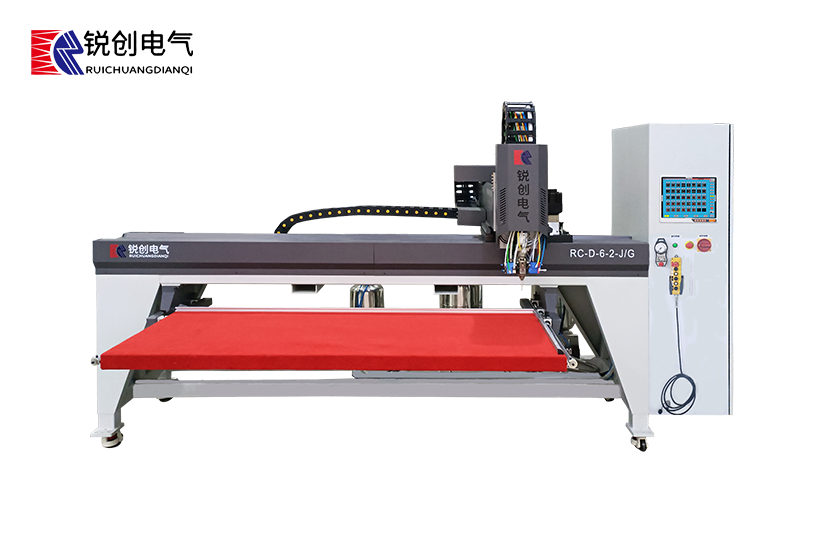
Choosing the right sealant dispensing machine for electrical cabinets starts with understanding your production scale, sealant type, and precision requirements. A well-matched dispensing system applies silicone, polyurethane, or MS adhesive with consistent bead width and volume, protecting cabinet interiors from moisture and dust ingress. For OEM manufacturers and procurement engineers, the decision involves evaluating dispensing technology, material compatibility, cycle time, integration capability, and supplier support. This guide walks you through each factor so you can make a confident, informed purchase that aligns with your quality standards and output goals.
Understanding Sealant Dispensing Machines and Their Role in Electrical Cabinet Production
To meet IP54 or IP65 ingress protection grades, electrical cabinets must have tight, constant seals. That consistency is much more likely to be achieved by a foam gasket machine or an automated adhesive applicator than by hand. This is what you need to know about how a sealant dispensing machine really works and why automated dispensing can improve sealing consistency.
How the Dispensing Process Protects Electrical Components
A controlled bead of sealant is put on the cabinet lip by a dispensing device. The bead turns into a seal when the lid closes, keeping dust and moisture out. The final seal's ability to pass IP testing depends on how well the bead's width, height, and volume are maintained.
FIPFG Technology and Its Advantage in Cabinet Sealing
Form-In-Place Foam Gasket (FIPFG) technology uses a polyurethane foam with two parts that cures and expands right on the part. The end result is a seal that fits perfectly and smooths out any rough spots on the surface. Frost & Sullivan released a report in 2022 on industrial sealing trends. The use of FIPFG in enclosure manufacturing increased by 18% year-over-year as die-cut gaskets were replaced to cut down on waste and improve the reliability of the seal.
From Manual Application to Automated Dispensing
When beads are put on by hand, they have thickness errors of ±2 mm or more. Automated filling systems get accuracy of ±0.3 mm or better, which cuts down on waste and extra work. For electrical cabinet lines that run 200 or more units per shift, the savings in labor and improvements in quality make the capital investment worthwhile within a reasonable amount of time.
Core Criteria to Consider When Choosing a Sealant Dispensing Machine for Electrical Cabinets
If you choose the wrong machine, you could end up with uneven cycle times, seals that don't work together, or expensive repairs. The following factors will help you cut down your choices in a useful way.
Dispensing Technology: Pneumatic vs. Electric vs. FIPFG
For single-component silicone and PU coatings, pneumatic devices are used a lot. They don't cost much and are easy to keep up. Electric servo-driven systems can control pressure more precisely and are best for uses that need accurate mass accuracy. When a formed-in-place seal is needed on cabinet flanges or container lids, FIPFG systems are the best option because they are made for two-component PU foam.
Sealant Compatibility and Viscosity Range
When selecting a sealant dispensing machine, make sure it is compatible with the sealant used in your application. Different cabinet makers use silicone (low viscosity, about 5,000 to 50,000 cps), polyurethane (medium viscosity), or MS polymer sealants. Make sure that the type of pump in the machine (gear, piston, or progressive cavity) can handle the thickness of your sealant without breaking down. Machines with temperature-controlled material paths help keep flow rates steady even when the weather changes from season to season.
Cycle Time and Production Volume Alignment
Match the cycle time of the machine to your takt time. Most cabinet production situations can be handled by a machine that can handle parts in 10 to 60 seconds. If your line has more than one cabinet size, look for a machine with programmable multi-path recipes. This way, workers can easily switch between part plans without having to retool each one by hand.
Evaluating Quality, Service, and Supplier Credentials
How well equipment works after five or ten years depends just as much on the support infrastructure of the supplier as it does on the machine's original specs. A reliable partner is different from a transactional seller in the following ways:
Certifications and Quality Documentation
CE marking shows that the product meets European safety standards for machinery, while ISO 9001 approval shows that the company has a structured quality management system. If a dealer gives First Article Inspection (FAI) reports and material tracking paperwork to cabinet makers who work with cars or send a lot of their products, audit risk is greatly reduced.
After-Sales Support and Response Time
Find out how quickly potential suppliers can fix technical problems. Many problems can be fixed quickly with remote help through video or PLC data upload. On-site commissioning and operator training make it easier to get big automation projects up and running. As part of its standard after-sales package, LYRC Machine offers remote technical support, installation support, operator training, software updates, and spare parts supply. For bigger projects, on-site service is also available.
Delivery Lead Times and Customization Capability
Standard machines usually get shipped between 15 and 30 business days. Customized configurations, like changing the working areas, choosing specific valve types, or adding a robot, usually take 30 to 60 working days. Get written confirmation of wait times before making a commitment, especially for project-driven procurement where delays can lead to fines for line startup.
Comparing Dispensing Systems: Making an Informed Decision
Once you have chosen two or three systems, an organized comparison will keep you from having to return them later. To compare them side by side, here are the core dimensions:
Ruichuang Model RC-D-6-2-B/J: A Practical Reference Point
The RC-D-6-2-B/J sealant dispensing machine uses FIPFG technology and a two-component PU foam material. The work area is 2,450 mm x 1,250 mm x 330 mm, and the seal width can be changed from 5 mm to 30 mm. The work area is 2,450 mm x 1,250 mm x 330 mm, and the seal width can be changed from 5 mm to 30 mm. For electrical cases, car parts, EV battery packs, and industrial enclosures, it was made. The machine is certified by both CE and ISO 9001. Here are some of the best things about this device:
- Compact and space-saving design: The machine fits into constrained floor plans without sacrificing output quality, making it practical for factories that cannot dedicate large footprints to a single workstation.
- Stable operation and low maintenance burden: Built on a proven dispensing platform, the system operates with minimal operator intervention. Maintenance access is straightforward, reducing scheduled downtime.
- Automated PU foam gasket forming: The machine automatically dispenses and forms the gasket bead in a single continuous pass, eliminating the handling steps associated with pre-cut gasket insertion.
- Cost-effective FIPFG solution: It delivers the performance characteristics of FIPFG sealing—conforming gaskets, consistent compression, and reliable IP ratings—without the overhead of a large-scale system.
The two biggest problems in cabinet sealing production that these benefits directly address are the uneven shape of the beads that come from hand methods and the high cost per unit of pre-formed seals. Since 2002, LYRC Machine has built automation systems around this kind of useful tech, putting process integration ahead of just selling machines.
Total Cost of Ownership Beyond the Purchase Price
Think about how much it costs to replace things like PU two-component material and mixing tools, how much energy it uses, how often it needs to be maintained, and how much it costs to have unexpected downtime. A machine that costs less up front but needs imported parts that take a long time to get can end up costing a lot more after three years.
Integration with Existing Production Lines
Make sure the machine works with the PLC transmission methods your company already uses. Common ones are Modbus, EtherCAT, and Profinet. Integration with upstream conveyor systems or downstream inspection stations gets rid of the need for human transfer steps and makes it easier to track down production data.
Practical Tips for Installation, Calibration, and Maintenance
Setting up the machine properly from the start will save you weeks of problems later. No matter which system you choose, the following tips will always be useful.
Site Preparation and Environmental Controls
Place the machine on a flat surface that is away from things that might cause vibrations. To keep PU foam material within its working window, keep the room temperature between 15°C and 30°C. It is best to control the temperature and humidity in the area where the foam is being dispensed if the humidity is above 70%.
Calibration Procedures for Consistent Bead Output
Use a weigh scale or bead width gage to do calibration shots at the start of every shift. Compare the results to the map you used as a guide. If readings go outside of your tolerance band, change the pressure or pump speed. This easy process finds changes in material flow before they cause parts to break.
Preventive Maintenance Schedule
As suggested by the maker, mixing nozzles should be replaced every 50 to 200 shots, but this can vary based on the material's pot life. Check the pump seals once a month and clear the material path at the end of each shift to keep cured residue from building up. An official maintenance log helps with ISO 9001 audits and makes machines last longer.
Conclusion
Choosing the right sealant dispensing machine for electrical cabinet production affects the quality of the finished goods, the speed of the production line, and the long-term costs of running the business. Choose the right technology (FIPFG, gas, or electric) based on the type of sealant, the shape of the cabinet, and the cycle time you need. Check the supplier's credentials, infrastructure for support, and delivery promises before you sign a purchase order. The RC-D-6-2-B/J machine shows that small, low-cost FIPFG options can meet tough output needs without sacrificing quality. Take the time to test a few samples, look over good literature, and compare the total costs of ownership of the products on your choice.
FAQ
What sealant types are compatible with automated dispensing machines?
Silicone, polyurethane, and MS polymer sealants can be used with most systems. For FIPFG machines and other two-component PU foam systems to work, they need a dual-metering pump and either a static or dynamic mixing tube. Before you buy a machine, you should always check the specification sheet to see if the material density and pot life match up.
Can a dispensing machine integrate with an existing conveyor line?
Yes, machines that work with PLC communication methods like Modbus or EtherCAT can get signals from sensors on the conveyor belt and send signals to places further down the line when the work is done. During your expert review, make sure you understand the exact procedure.
How do I verify that the gasket will meet IP65 requirements?
After changing the shape of the beads, test the sample cabinets for pressure decay or water ingress. The two most important factors are a consistent bead width (within ±0.3 mm) and enough foam expansion. As part of your FAI process, write down the findings.
What maintenance does a FIPFG system require?
It is standard to replace the mixing nozzle every day, clear the material line once a week, and check the pump seal once a month. Keep a repair log to help with quality checks and to spot early signs of wear.
How long does commissioning typically take?
With a trained technician on site, standard tools can be put to use in one to three days. Customized systems with robots or conveyors may take five to ten days, which includes training for the operators.
Connect with Ruichuang for Your Next Dispensing Project
Our team at Ruichuang (LYRC Machine) has been automating the making of sheet metal since 2002, so we know a lot about the process. We can help you with ODM/OEM design, CE and ISO 9001 certification, and global shipping, whether you need a basic Sealant Dispensing Machine or a fully integrated foam gasket line for electrical cabinets. You can email us at sales@lyrcautomation.com to ask for a sample evaluation or project consultation right away.
References
Frost & Sullivan. (2022). Global Industrial Sealing and Gasketing Technology Trends Report. Frost & Sullivan Research & Analysis.
International Electrotechnical Commission. (2013). IEC 60529: Degrees of Protection Provided by Enclosures (IP Code). IEC Publication.
Society of Manufacturing Engineers. (2021). Adhesive and Sealant Dispensing in Automated Assembly. SME Technical Publication Series.
Henkel AG & Co. KGaA. (2023). Form-In-Place Gasket Solutions for Industrial Enclosures: Application Guide. Henkel Industrial Adhesives Division.
International Organization for Standardization. (2015). ISO 9001:2015 Quality Management Systems — Requirements. ISO Publication.
European Committee for Standardization. (2006). EN 13980: Potentially Explosive Atmospheres — Application of Quality Systems. CEN Technical Report.
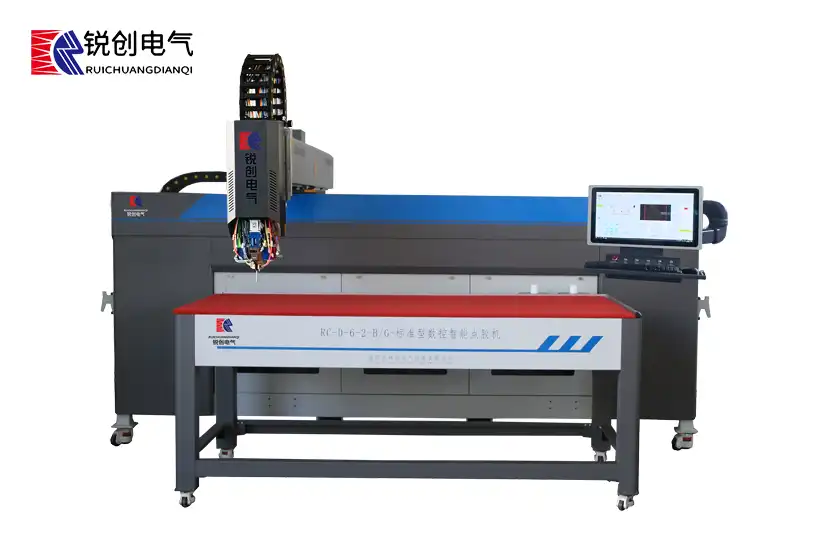
When buying a PU Foam Gasket Dispensing Machine, you need to weigh dispensing precision, production throughput, foam material compatibility, automation level, and long-term supplier support. The right FIPFG sealing system should match your workpiece geometry, IP protection requirement, and line cycle time—while coming with verified certifications such as CE and ISO 9001. Getting these factors right upfront protects your investment and keeps your production line running without costly interruptions.
Understanding PU Foam Gasket Dispensing Machines
What the Technology Actually Does
A PU Foam Gasket Dispensing Machine used for formed-in-place foam gasket (FIPFG) production mixes two polyurethane parts—polyol and isocyanate—at a precise stoichiometric ratio and then pours the liquid right onto the surface of a part. It foams up and hardens in place, making a continuous wall with no gaps. This is used instead of die-cut rubber strips and manual gasket fitting, which can go out of place and not compress properly every time.
Core Machine Types
Fully automatic CNC dispensing systems can handle large amounts of complicated 3D profiles with an accuracy of ±0.02 mm. Semi-automatic models work well in shops with average parts loads where an operator loads and unloads the parts. For prototypes or jobs with very few units, manual filling stands can be used. A servo-driven CNC machine with vision alignment is the best way to make parts for electrical cabinets or cars.
Where These Machines Are Used
Electricity boxes, car door modules and taillights, EV battery pack housings, outdoor LED light fixtures, HVAC shells, and industrial filter housings are all made with FIPFG sealing technology. It depends on the job what kind of foam toughness, bead width, and cure plan is needed. This is why machine flexibility is just as important as raw accuracy.
Core Factors to Evaluate When Choosing a Foam Gasket Dispensing System
Dispensing Precision and Path Accuracy
When selecting a PU Foam Gasket Dispensing Machine, dispensing precision and path accuracy are critical factors to consider. Whether a finished container passes an IP66 or IP67 test is directly related to how accurate the path is. Look for servo-driven axs that have encoder input and a vision-alignment module that can be added as an extra. This will help with mounting variation. Instead of switching hardware, the flow rate and movement speed of the pump should be able to be changed to get bead sizes between 5 mm and 30 mm.
Throughput and Cycle Time
Match your shift goal to the machine's rated run time. For making electrical cabinets, a single-door panel should be able to finish a filling cycle in 30 seconds, which includes the time it takes to clamp. You can set the foaming time between 8 and 60 seconds, so you don't have to buy a second machine to get the best results for both fast production runs and thicker, denser gasket profiles.
Material Handling and Temperature Stability
Polyurethane changes when the temperature changes. A device that heats and cools the A/B material tanks on a regular basis keeps the viscosity and mix ratio stable even when the temperature outside changes. If you don't have it, the foam density and tack-free time will change between morning and afternoon shifts, which will make the reject rate go up. Make sure that the machine constantly checks the temperature of the tank and lets operators know when conditions aren't meeting standards.
Comparing Your Equipment Options
Fully Automated vs. Semi-Automatic Models
A fully automated CNC system cuts the number of direct workers by one to two per shift and stops people from going off track. A semi-automatic type costs less up front, but it needs a trained operator to place the workpieces correctly. Full automation usually pays for itself in 18 to 24 months for factories that make more than 200 enclosures per shift because it saves workers time and money.
Total Cost of Ownership
The price you paid is only one line item. Take into account the cost of replacing the mixing head seal every year, lubricating the linear guides, and software updates. Not just a machine price, but also an estimate of the cost of ownership over five years. Machines that can use standard extra parts that can be bought from many places are less likely to break down when their supplies run out than machines that need special parts.
Certifications and Compliance Documents
If you want to sell your goods in North America or Europe, you have to have CE marking and ISO 9001 approval. CE paperwork is looked over twice: once when it goes through customs and again when the customer checks it. Shipments and sales have been held up because CE files were not complete or were self-declared. Make sure the supplier gives you more than just a CE label on the nameplate. Ask for a full technical file, a Declaration of Conformity, and test reports.
Practical Considerations for Getting the Most Out of Your Machine
Integration with Existing Production Lines
Bottlenecks happen when a dispensing machine can't talk to equipment upstream and downstream. Make sure the system works with common industrial protocols like Profibus, EtherNet/IP, or Modbus so it can send and receive status messages with your robot arm, conveyor, or quality control station. It takes less time to switch between container types when you can import CAD files and program while you're not online.
Safety and Operator Training
People who are exposed to isocyanates need to wear safety gear and allow air to flow through the area. The electrical cabinet, glue supply system, and motion control of the machine should all be housed in a single frame that keeps the user from coming into touch with moving parts and chemical dispensing zones. How quickly your team hits full production speed depends on how well they train operators. The best training is when it happens both on-site and through online video sessions.
After-Sales Support and Spare Parts Access
This is where a lot of buyers don't think about the risk. Unplanned downtime is greatly reduced when the provider has quick online technical support, written troubleshooting guides, and extra parts on hand. Make sure you have written confirmation of response times before you sign a purchase order. On-site setup and warranty support should be built into the contract, not added on as extras.
These operational factors—integration, safety, and ongoing support—often make the difference between a machine that works well for a long time and one that doesn't after the first year.
How to Make the Final Purchase Decision
Define Your Non-Negotiable Specifications
Before you call any suppliers for a PU Foam Gasket Dispensing Machine, write down the workpiece envelope, the required gasket bead width range, the target cycle time, the foam material specification (hardness, density, and temperature resistance), and the certification needs. This one step gets rid of offers that aren't matched and makes it fair to compare vendors.
Request a Sample Run Before You Commit
Send the seller a real piece of work to do a test dispensing run on, or set up a live video example of a similar part. Check the path deviation at corners and curves, look at the cross-section of the foam to make sure the density is consistent, and measure the tack-free time at the temperature where you are. Instead of marketing claims, real test data is used.
Negotiate the Full Package
Before you send out a purchase order, you should agree on the price, the warranty terms, the spare parts inventory, the training scope, and the expert help for the first year. With a clear delivery schedule—usually 15 to 30 working days for standard machines and 30 to 60 working days for custom configurations—your team can plan for installation and training for operators without stopping production.
Conclusion
It takes more than just comparing description sheets to pick the right foam gasket dispensing tools. It depends on the accuracy of the path, the ability to control the material temperature, the cycle time, the completion of the certification, and the supplier's ability to provide support to see if your investment produces consistent IP-rated seals at the rate your line needs. Carefully look at each factor, try out a real sample, and make sure you understand the whole after-sales package before deciding to commit. A machine that is well-matched and backed by a knowledgeable supplier will cut down on labor costs and reject rates for years to come.
FAQ
How is the mixing head cleaned to prevent clogging?
Most current FIPFG systems have an automatic high-pressure water-flushing cycle that cleans the mixing chamber of any foam that is left over after each output stop. This method is better for the environment than liquid cleaning because it stops foam from building up, which would change the mix ratios over time if it happened.
Can bead width be adjusted without changing hardware?
Yes. To make beads with widths between 5 mm and 30 mm, you can change both the flow rate of the gear pump and the speed of the CNC travel. Most changes in width in that range don't need a valve swap.
How long does the foam gasket take to cure fully?
Depending on the type of cloth and the temperature outside, the tack-free time is usually between 3 and 10 minutes. Within 20 to 60 minutes, the gasket usually reaches its full functional cure, which means it is as hard and set as it can be under compression.
What maintenance keeps long-term precision intact?
The three most important tasks are to regularly calibrate dosing pumps, replace mixing head seals when they wear out, and grease CNC linear guides on a regular basis. These steps keep the repetition accuracy of ±0.02 mm that IP-rating tests need.
Does ambient humidity affect foam quality?
Isocyanate reacts more quickly when there is a lot of humidity, which shortens the pot life and can lead to surface flaws. This risk is handled by machines that have air-drying units on the material bins and nitrogen blanketing for the isocyanate drum. This keeps the density of the foam the same throughout the year.
Partner with Ruichuang for Your Next PU Foam Gasket Dispensing Machine
Since 2002, Ruichuang has been focusing on automating the production of sheet metal. This has given us 24 years of direct production experience. Our RC-D-6-2-B/G PU Foam Gasket Dispensing Machine has a working area of 2,450 × 1,250 × 330 mm and gasket widths from 5 to 30 mm. It is approved by CE and ISO 9001 and is used for electrical cases, car parts, EV battery packs, and industrial enclosures. We are a verified manufacturer of the PU Foam Gasket Dispensing Machine, and we offer ODM/OEM customization, remote commissioning, and long-term spare parts supply. You can get a free trial by emailing us at sales@lyrcautomation.com.
References
Machinery's Handbook, Industrial Press, 2020.
Polyurethanes Handbook, Hanser Publications, 2019.
IEC 60529 – Degrees of Protection Provided by Enclosures (IP Code), International Electrotechnical Commission, 2013.
IEC/EN 61439 – Low-Voltage Switchgear and Controlgear Assemblies, International Electrotechnical Commission, 2021.
Handbook of Adhesives and Sealants, McGraw-Hill, 2016.
Automation in Manufacturing: Principles and Applications, Society of Manufacturing Engineers, 2018.
A CNC automatic stud welder improves sheet metal fabrication by replacing slow, inconsistent manual welding with computer-controlled precision. These machines use servo-driven positioning and automated stud feeding to place M3–M12 studs on carbon steel, stainless steel, or aluminum surfaces with positioning accuracy of ±0.3mm or better. Supporting drawn arc (ARC), short-cycle (SC), and capacitor discharge (CD) welding methods, they achieve cycle times as low as 3–8 seconds per stud. The result is higher throughput, fewer weld defects, and audit-ready process documentation that meets IATF 16949 and ISO 9001 requirements.
Understanding CNC Automatic Stud Welders and Their Role in Sheet Metal Fabrication
What the Machine Actually Does
A motion processor, a servo-driven crane, and an automatic vibratory bowl feeder are all built into one production unit that is called a CNC stud welding system. The CNC program tells the feeder where to put a stud, the welding head goes to each point, and the weld goes off without anyone touching the piece of work. Electrical enclosure door panels, auto body panels, appliance housings, and server cabinet side plates are just a few of the common uses for this material.
Three Welding Processes, One Platform
One of the best reasons to use CNC automation is that you can switch between drawn arc, short-cycle, and battery discharge methods. A drawn arc is best for thicker structural parts, a short cycle is best for medium-gauge sheet metal that needs to be worked on quickly, and a capacitor discharge protects thin or decorative surfaces by focusing heat at the stud tip in micro-milliseconds while leaving the back side unmarked. Because all three processes are done on the same platform, a single machine can handle a wide range of products.
CAD/CAM Integration and Program Recall
Modern CNC bolt welders can directly read CAD coordinate files, which means engineers can quickly import a new fixture plan and make a welding path. It only takes less than 30 minutes of retraining time to switch between part numbers thanks to program recall. This directly addresses one of the main issues from production workers who are in charge of mixed-model lines.
How CNC Automatic Stud Welders Solve Traditional Fabrication Challenges
Three problems keep coming up with manual and semi-automatic stud welding: the quality of the weld depends on how skilled the user is; there are slowdowns in production when qualified welders are hard to find; and arc flash and weld spatter can be dangerous. Instead of depending on individual skill, CNC technology takes care of all of these at the process level.
Eliminating Weld Inconsistency
Every cycle, the plunge depth and touch pressure are managed by a servo that moves along the Z-axis. With closed-loop current tracking, the system makes sure that the weld parameters stay within a certain range, even if a user gets tired or their shift changes. This directly lowers cold welds, porosity, and pin pull-out fails that lead to assembly rejects further down the line.
Cutting Cycle Time and Labor Cost
On a good day, a trained person using a hand-held stud gun can make about 100 to 150 studs per hour. More than 400 to 600 studs can be added to the same fixture every hour by a CNC automatic system running a short-cycle process. That big increase in throughput cuts down on the time needed to work directly on each part, so the same number of people can oversee more production lines.
Smoke Extraction and Workplace Safety
Built-in dust collection and fume extraction modules keep the amount of dust and fumes in the air below the levels that are safe for workers according to OSHA (5 mg/m³ for general welding fumes). When a user feeds the studs automatically, their hands stay away from the arc zone. This lowers the risk of arc flash burns, which are still one of the most common injuries in manual stud welding.
Benefits of CNC Automatic Stud Welders for B2B Procurement Clients
When purchasing a CNC automatic stud welder, teams usually look at three types of return: how well it works for output, how well it makes sure quality, and how well it meets audit requirements. Here are the main benefits that this kind of tools brings to all three areas:
- Higher throughput per shift: Cycle times of 3–8 seconds per stud allow a single machine to match the output of three to four semi-automatic stations, freeing floor space and reducing energy draw per weld.
- Lower scrap and rework rates: Precision positioning at ±0.3mm and repeatable weld parameters cut first-pass reject rates, which in automotive and electrical cabinet production can represent 2–5% of total output under manual methods.
- Stud batch traceability: The CNC controller logs weld time, current, and position data for every stud fired. This log satisfies IATF 16949 clause 8.5.2 traceability requirements and gives quality engineers the data they need during a customer plant audit.
- Flexible material coverage: M3–M12 studs in carbon steel, stainless steel, and aluminum can run on the same machine with parameter set changes, supporting mixed-material product families without additional capital equipment.
Higher production per shift: cycle times of 3–8 seconds per stud let a single machine match the output of three to four semi-automatic stations. This frees up floor space and lowers the amount of energy needed for each weld.
How to Choose the Right CNC Automatic Stud Welder for Your Fabrication Needs
Match the Process to the Base Material
It is best to use capacitor discharge for metal sheets that are less than 1.5 mm thick or for surfaces that have a finish that can't show heat distortion. Frame parts bigger than 3 mm can use drawn circle. It's in the middle, between these two. Burn-through or poor fusion can happen if the wrong process is chosen, so the thickness of the material and the needs of the surface should guide the process choice before any other choice is made.
Evaluate Cycle Time Against Your Takt Time
If every 45 seconds, your production cell has to deliver a finished panel with 12 studs, so you need a machine that can do 12 welds in less than 30 seconds, plus time to load and remove the fixtures. Find the highest number of studs on each piece of work, and then make sure that the rated cycle time of the machine you're considering fits within your takt window by at least 15%.
Check After-Sales Infrastructure
If a CNC automatic stud welder breaks down during production, it costs the same whether the problem is a worn chuck or a bug in the software. Before making a commitment to a supplier, make sure they can respond quickly. A 4-hour on-site response for facilities in the Yangtze River Delta region and an 8-hour remote diagnosis for customers outside of China is a good standard. Also, make sure that the tools you need are available in your own country. For example, welding chucks, nozzles, and feed tubes usually need to be replaced every 10,000 to 30,000 rounds.
Maintenance, Safety, and Troubleshooting Tips for Optimal Performance
Daily and Weekly Maintenance Routines
At the end of each shift, clean the welding chucks and feed tubes to keep sparks from building up and changing the shape of the contact. Every week, check the pneumatic pressure controls. The Z-axis downward pressure affects the depth of the fusion directly, and a 10% drop in pressure can actually measureably lower the tensile strength. Back up your CNC codes once a month so that you don't lose them when you change the firmware on your controller.
Operator Safety Protocols
Even when systems are automatic, operators still need to wear the right PPE, like a rated welding face shield, leather gloves, and flame-resistant clothes. This is because workers are still exposed to residual arc risk when they change the chuck or set up the machine by hand. Before each shift starts, make sure that the machine's two-hand enable and physical guarding interlock work.
Diagnosing Weak Welds
It's almost always one of five things that cause automatic welds to be weak or cold: surface contamination (oil or mill scale), poor earth return grounding, misaligned stud feed, worn chuck contact faces, or air pressure that isn't within specs. Before changing the weld current, make sure you've done these five checks in order. If you change the current to fix a technical problem, you'll only hide the problem instead of fixing it.
Conclusion
Changing from semi-automatic or manual stud welding to a CNC automatic stud welder is more than just an upgrade in technology; it's also a choice about how to make things. When you combine servo positioning, the ability to do more than one process at once, and integrated traceability logging, you get a solution that meets the needs of OEM providers, electrical cabinet makers, and sheet metal fabricators: consistent weld quality, audit compliance, and predictable output. To pick the right machine, you must first make sure that the welding process fits your material and takt time needs. Next, you must choose a provider that has the after-sales support to keep the line going.
FAQ
What sheet metal materials are compatible with automated stud welding?
A common base is made of carbon steel, stainless steel, or an aluminum blend. Capacitor discharge can also be used to work on galvanized and powder-coated surfaces because it burns through thin coatings at the weld interface without hurting the finish around it.
How much more consistent is CNC stud welding compared to manual methods?
Studies that used controlled production found that automatic stud welding systems have first-pass weld acceptance rates above 99%, while skilled manual workers only get 92–95%. The main reason for this is getting rid of differences between operators in gun angle, contact pressure, and arc timing.
Does the system support quality documentation for customer audits?
Yes. For each stud, the controller keeps track of the weld current, cycle time, and XYZ position. This makes a per-part weld log that meets the standards for tracking set by IATF 16949 and ISO 9001:2015.
What are the typical consumable replacement intervals?
Chucks and nozzles for welding need to be cleaned every day and replaced every 10,000 to 30,000 cycles, based on the amount of current and the base material. Every week, check the delivery tip of stud feed tubes for wear.
Can one machine run multiple stud sizes?
Yes, one machine can handle stud sizes from M3 to M12 as long as the tools and parameters are changed. A trained operator can usually re-tool in less than 30 minutes.
Request a Custom CNC Stud Welding Solution from Ruichuang
Since 2002, Ruichuang has been focusing on sheet metal automation. He has 24 years of direct production experience making electrical cabinets, auto parts, and appliance housings. As a maker of only CNC automatic stud welders, we make machines that fit your part shape, stud specifications, and takt time. We then help you with installation, operator training, and long-term spare parts supply. To get a sample weld test or a technical advice, email our engineering team at sales@lyrcautomation.com .
References
American Welding Society. AWS D1.1/D1.1M: Structural Welding Code — Steel. 2020.
International Organization for Standardization. ISO 14555: Welding — Arc Stud Welding of Metallic Materials. 2017.
International Organization for Standardization. ISO 13918: Welding — Studs and Ceramic Ferrules for Arc Stud Welding. 2017.
Automotive Industry Action Group. IATF 16949:2016 — Quality Management System Requirements for Automotive Production. 2016.
Occupational Safety and Health Administration. OSHA Technical Manual, Section III, Chapter 5: Welding, Cutting, and Brazing. U.S. Department of Labor, 2019.
Schwartz, M. M. Handbook of Structural Ceramics and Welding Technology. McGraw-Hill, 2003.
- 1