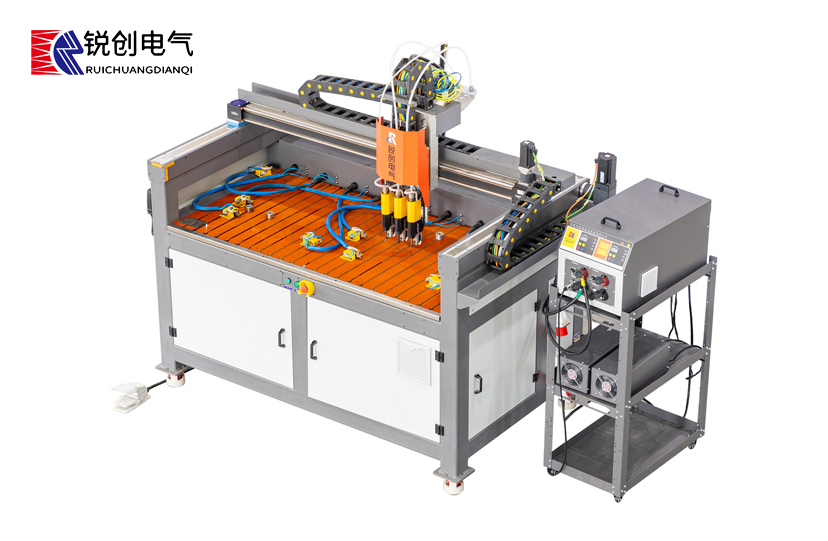
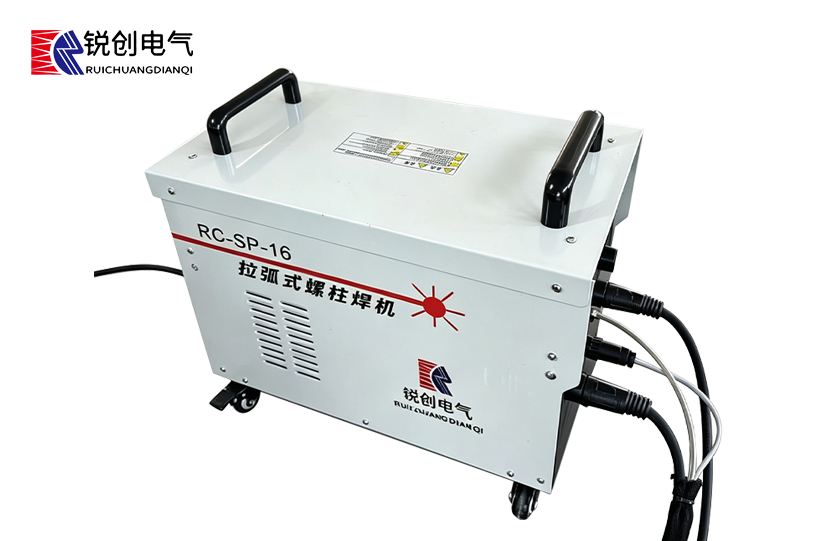
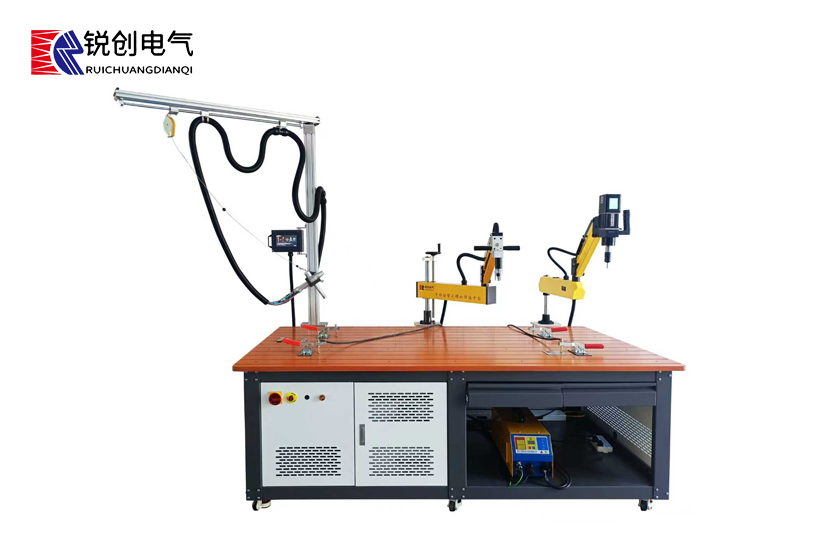
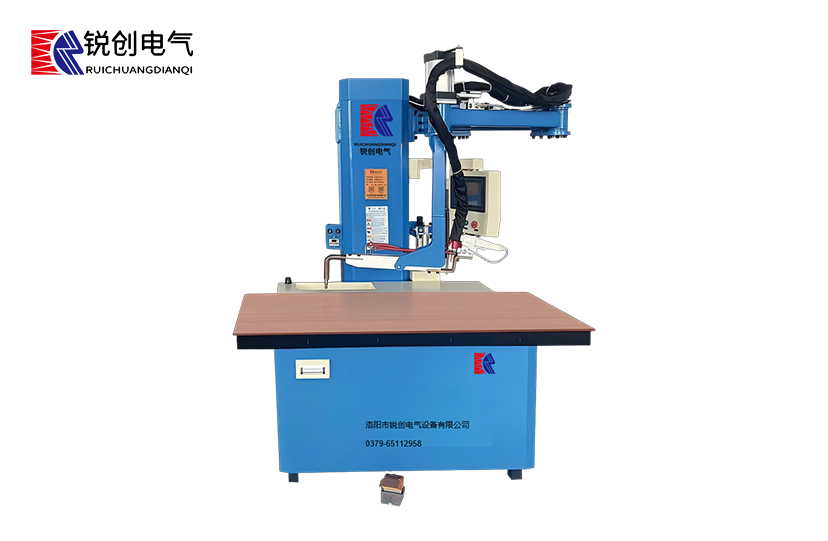
Capacitor Discharge Stud Welders
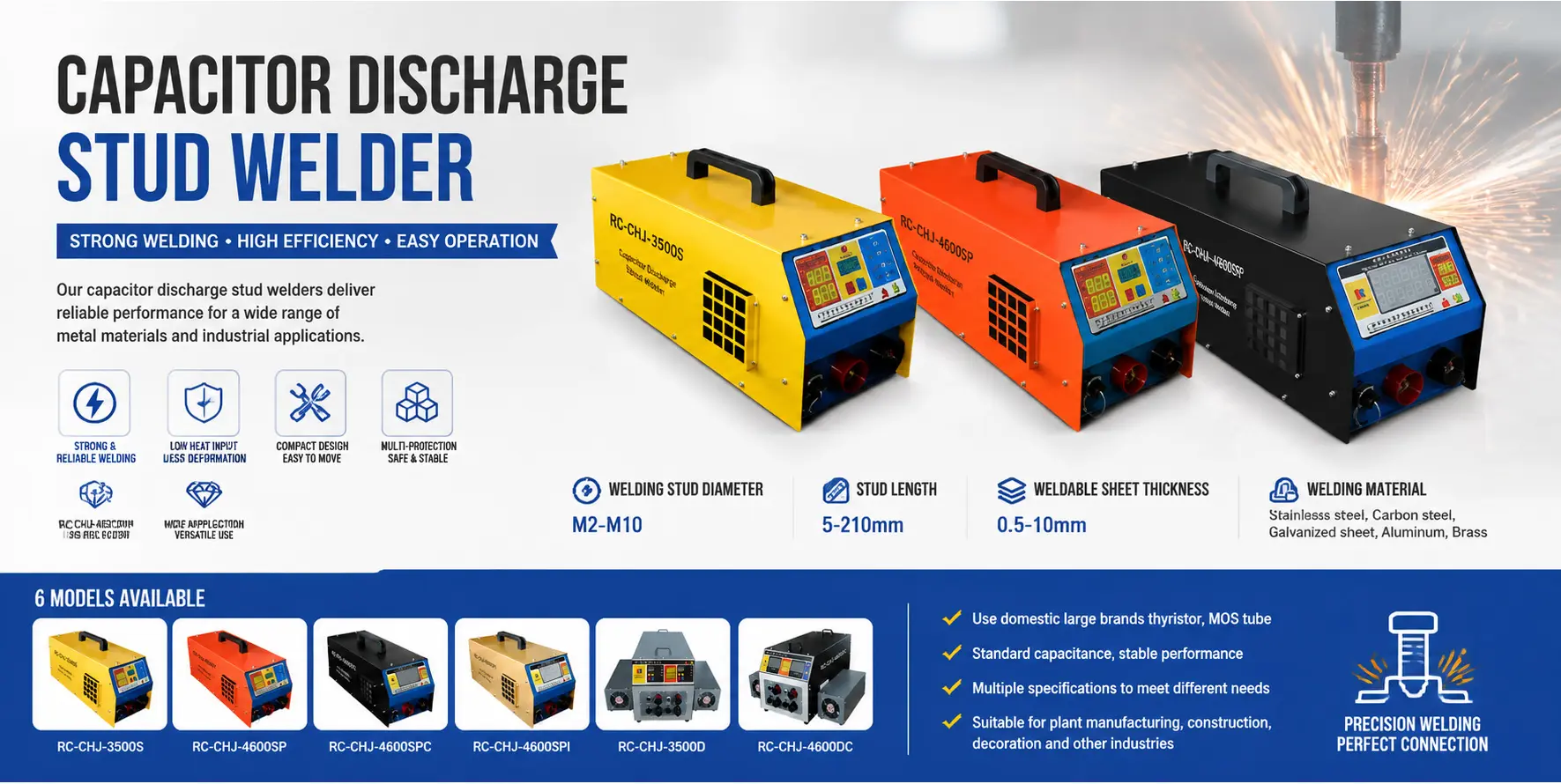
Weldable stud size: M2‑M10
Input power: Single‑phase 220V 50Hz
Min Sheet Thickness: 0.5mm Thin Metal Sheets
Welding speed: Up to 25-30 Studs/min
Applicable Materials: Carbon Steel, Stainless Steel, Galvanized Steel, Aluminum, Brass
Capacitor Discharge Stud Welders for Thin Sheet Metal — Fast, Clean, and Mark-Free Fastening
Capacitor discharge stud welders are designed for one specific problem: attaching small threaded studs to thin sheet metal without leaving burn marks, distortion, or reverse-side damage. Luoyang Ruichuang builds these machines to handle stud sizes from M2 to M10, running on standard single-phase 220V power. The welds are made in 1 to 3 milliseconds, focusing the intensity of the arc to such an extent that the base metal around the weld remains cold – a feat that arc welding techniques cannot dependably perform on light gauge sheet below 3mm.
How Capacitor Discharge Stud Welding Works
Before each weld, the machine charges a high-capacity capacitor bank. When you squeeze the trigger, all that energy is released quickly via a tiny ignition point at the base of the stud. In milliseconds the arc melts the workpiece surface and the stud point. The stud then enters the molten pool and on cooling creates a strong metallurgical bond.
The procedure doesn't need pre-drilled holes, tapping or supporting hardware. The weld produced is a low spatter joint and a clean profile is seen on both sides of the sheet.
Two welding modes are available. Stainless and carbon steel are generally contact mode, with the stud sitting on the surface before the arc firing. The gap mode is used for aluminium and other high conductivity metals, the stud descends from a predetermined height to provide a cleaner arc profile on materials that transfer heat away fast.
Key Technical Specifications of Capacitor Discharge Stud Welders
| Product Name | Stud Welding Machines | |||
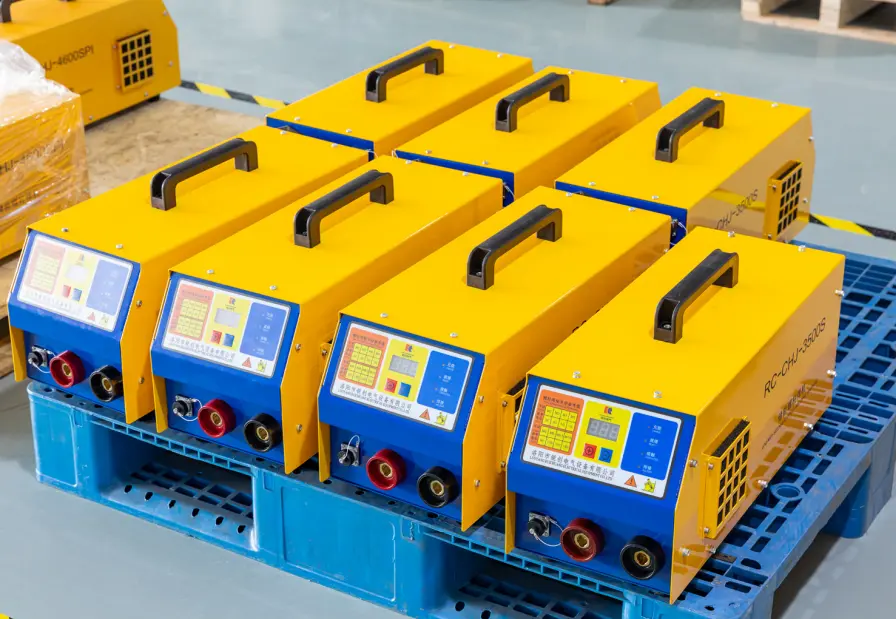
| Model | RC-CHJ-3500S | RC-CHJ-4600SP | RC-CHJ-4600SPC | RC-CHJ-4600SPI |
| Capacitance capacity | 99000uF | 132000uF | 132000uF | 132000uF |
| Stud Diameter | M3-M8 | M3-M10 | M3-M10 | M3-M10 |
| Charging voltage | 20~200V adjustable | |||
| Stud length | Standard 5-35mm (can be extended to any length) | |||
| Welding speed | 25-30 PCS/min (depending on input voltage and stud diameter) | |||
| Minimum plate thickness requirement | 1/10 stud diameter minimum 0.5 mm | |||
| Suitable plate thickness | 0.5-2mm | |||
| Welding material | Stainless steel, carbon steel, galvanized sheet, aluminum, brass | |||
| Dynamic mode | Capacitor energy storage | |||
| Supply Voltage | 220V/50Hz | |||
| Dimension | 550 x 211 x238 (mm) | |||
| Weight | about 26KG | |||

Why Weld Time Matters on Thin Sheet
On galvanised or stainless steel sheet under 2mm excess heat causes loss of zinc coating, discolouration and bending of the surface. These difficulties lead to an increased period of rework and influence the look of visible panels.
This 1-3 millisecond discharge period ensures a limited Heat Affected Zone (HAZ) so that the metal around the weld does not reach temperatures that cause deformation or coating degradation.The back face of the sheet stays clean. This is the practical reason CD stud welding is specified for enclosures, cabinetry, and panels where the finished surface must remain undamaged.
Voltage consistency during the capacitor charging cycle is also monitored in each weld cycle. Input fluctuations that cause cold welds or excessive spatter are caught before the next stud is placed.
Compatible Materials and Applications
The machine works across the following base materials:
- Carbon steel and stainless steel (Contact mode)
- Galvanized steel (Contact mode; short weld time limits zinc layer damage)
- Aluminum and brass (Gap mode for high-conductivity metals)
These material capabilities make the equipment of Capacitor Discharge Stud Welders suitable for several production contexts:
Electronics and enclosure fabrication — Mounting pillars attached to thin aluminum or stainless steel chassis panels without damaging backside coatings or markings.
Automotive and transportation — Trim clips and wiring brackets welded to galvanized body panels, where protecting the zinc layer on the reverse face is a process requirement.
Commercial food service equipment — Handles and internal brackets fastened to stainless steel cabinetry without producing burn marks or surface crevices.
Sheet metal workshops — Stud placement on control panels and electrical enclosures where access to the back of the sheet is limited or not possible.
Weld Quality Verification
Typical methods of weld quality verification for CD stud equipment are as follows. These are in accordance with ISO 14555 stud welding requirements .
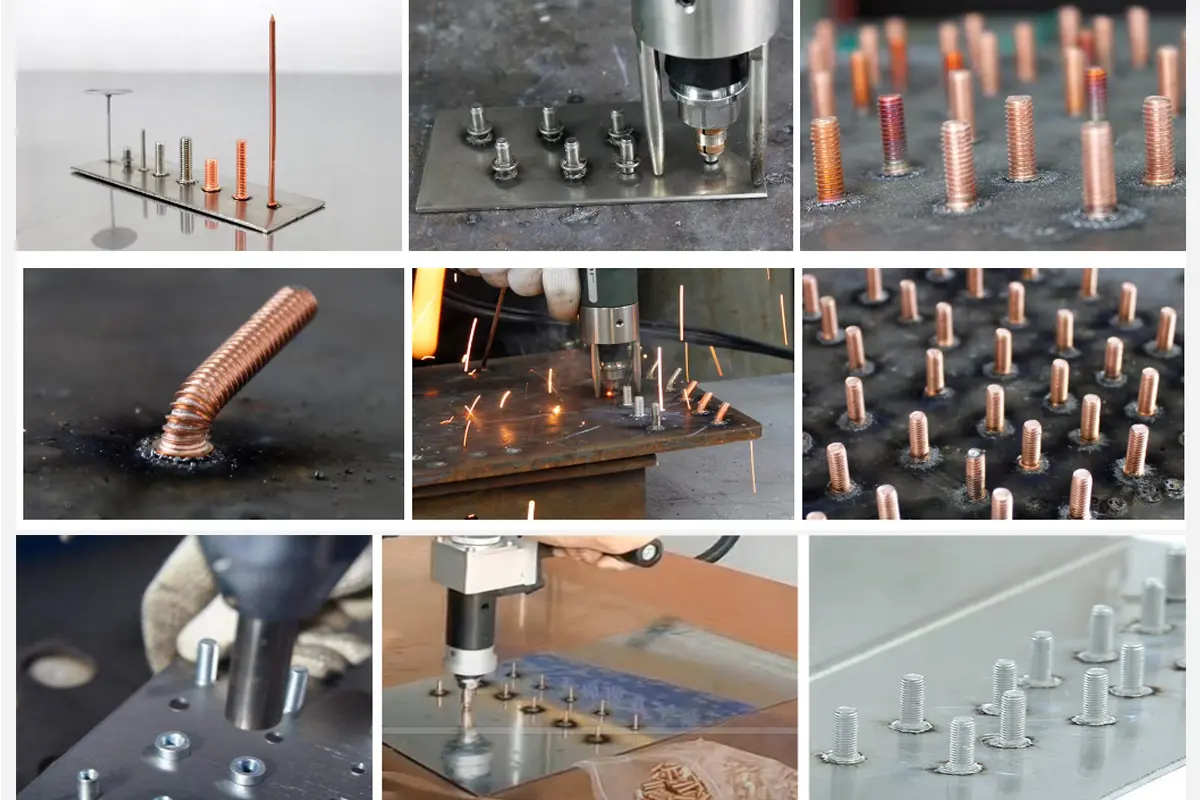
Bend Test: The stud is bent 30 degrees or 60 degrees. A passing weld is one that has no breaking in the fusion zone . This confirms 100 % metallurgical connection .
Torque-Out Test: Load is applied to the threaded stud to the rated tightening torque. Shearing at the weld shows a lack of fusion.
Tensile Test Pull force is applied axially until failure. The ideal is that the weld interface does not fail, but rather the stud shank.
Visual Flash Inspection: A uniform ring of ejected metal around the whole 360 degree circumference of the base of the stud is evidence of uniform arc distribution and full fusion.
The tests may be executed on sample welds as part of a production setup verification prior to a complete run.
Design and Power Requirements for Portable
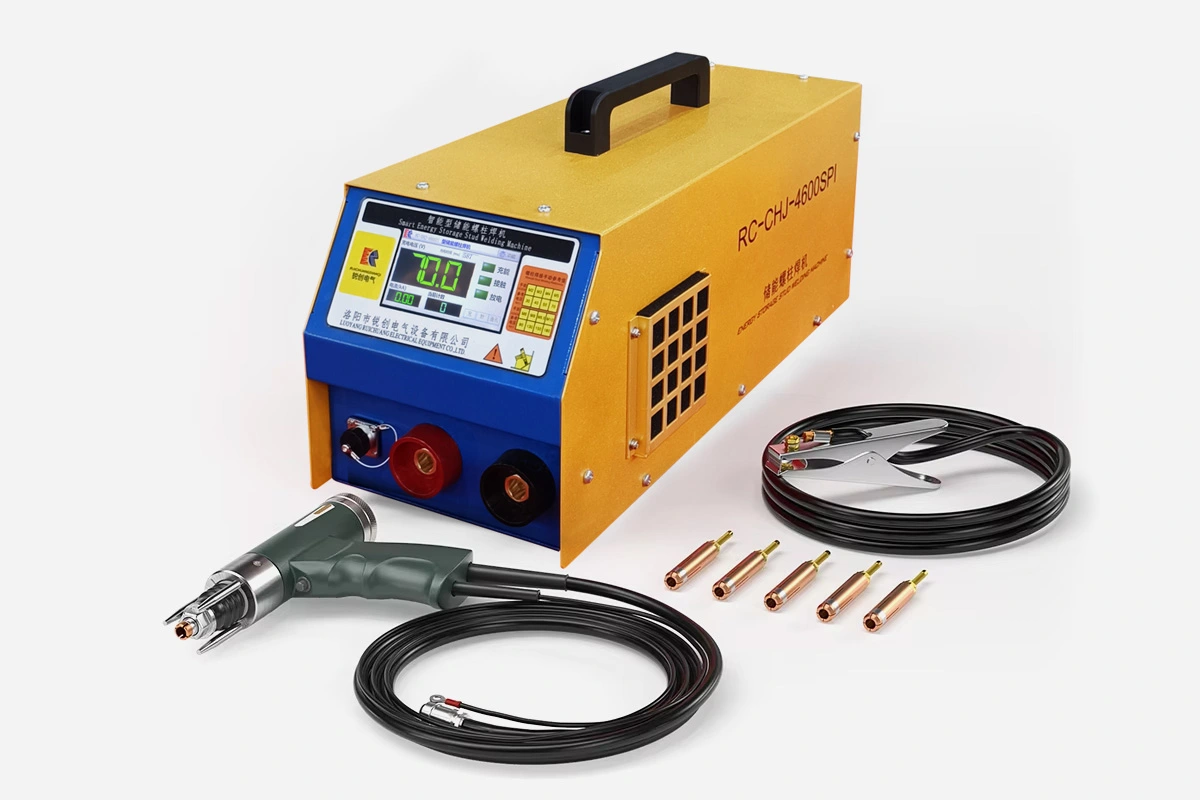
The equipment is composed of a small main unit and a hand-held welding gun interconnected by a flexible cable. This structure enables the equipment to be employed at a permanent workstation or transported to on-site installation and maintenance chores.
It has single phase 220V, 50Hz input therefore will operate from the normal workshop power socket. No specific transformer, phase converter, or special power circuit is needed. This is useful for smaller fabrication facilities and field maintenance applications when the power infrastructure is restricted.
About Luoyang Ruichuang Electrical Equipment Co., Ltd.
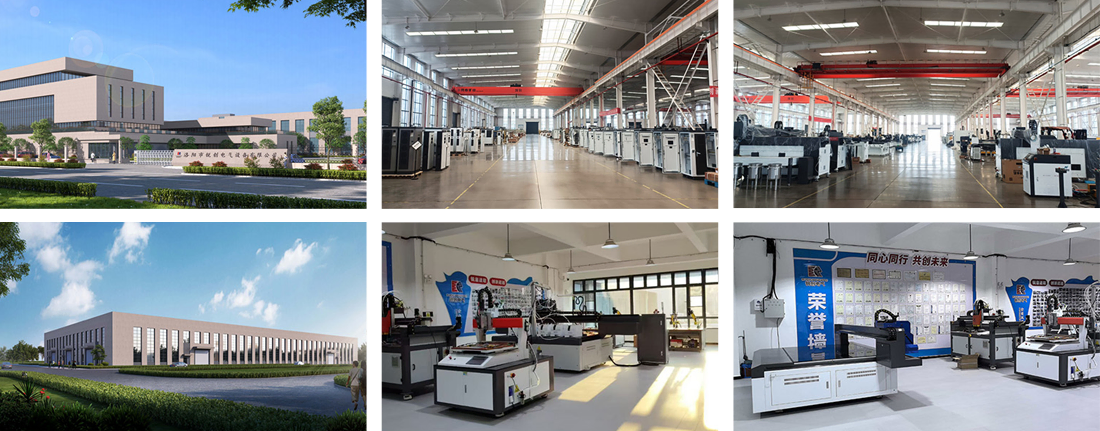
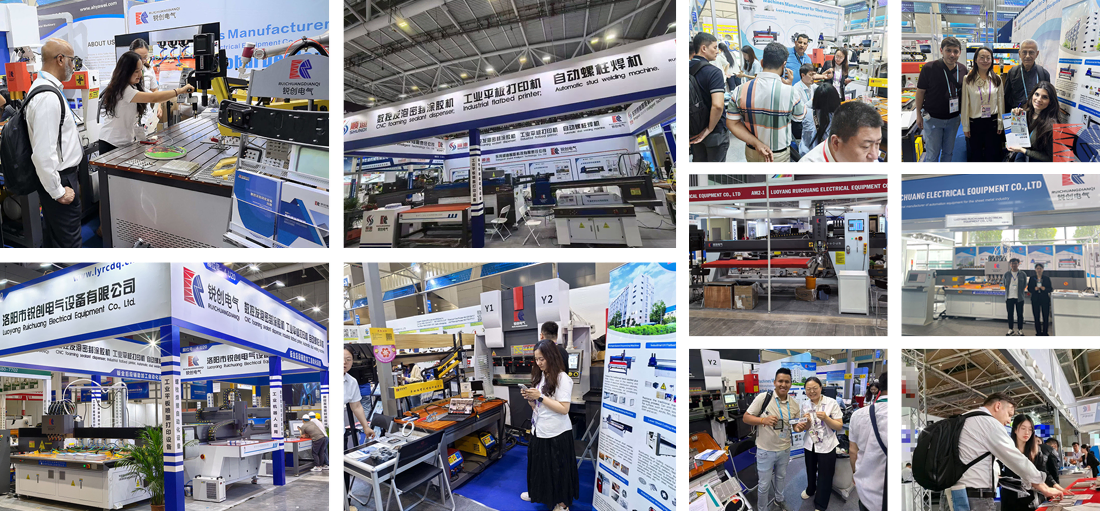
Luoyang Ruichuang was established in 2002, ... The firm develops and produces stud welding equipment, CNC foam sealing machines, laser welding and cutting equipment, flatbed inkjet printers, and industrial robot application systems.
An in-house after-sales service staff is responsible for installation, commissioning, troubleshooting and technical training across the equipment life cycle.
FAQ
Q:What are the major scenarios of the products?
A: CD stud welders are used to swiftly and easily connect tiny threaded studs to thin metal sheets without substantial heat penetration. They are selected when the reverse side of the sheet has to be kept clean and undamaged following welding.
Q:What stud sizes does this machine support?
A:The machine handles M2 to M10 studs. It is best suited for M2–M8 on light-gauge sheet below 3mm thickness.
Q:Can the machine weld galvanized or stainless steel?
A:Yes. The short weld time limits surface damage on galvanized sheet and minimizes discoloration on stainless steel. Both materials are within the machine's stated compatibility range.
Q:Does the surface need to be clean before welding?
A:Yes. The process depends on direct electrical contact between the stud tip and the workpiece. Paint, heavy oxide, or rust increases arc resistance and causes weld failure. The base surface should be clean and conductive before welding.
Q:What is the difference between Contact and Gap welding mode?
A:Contact mode places the stud directly on the surface before firing and is standard for steel. Gap mode drops the stud from a preset height before the arc fires and is used for aluminum and brass, where high thermal conductivity affects arc behavior.
Q:What causes uneven or one-sided welds?
A:The most common causes are poor ground clamp placement and a tilted gun angle. Ground clamps should be placed symmetrically on the workpiece, and the gun should be held perpendicular to the sheet surface.
Contact Us
Have questions about our capacitor discharge stud welders or want to request a quote? Reach us at sales@lyrcautomation.com — we're glad to help.