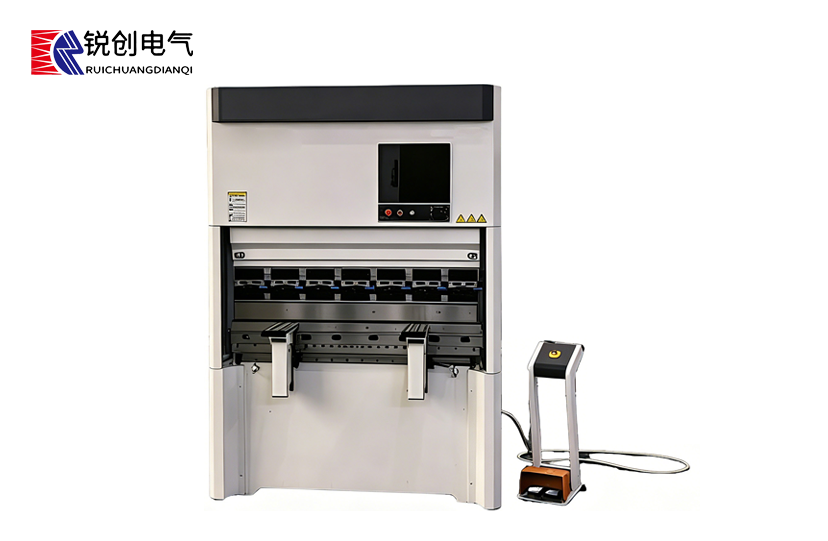
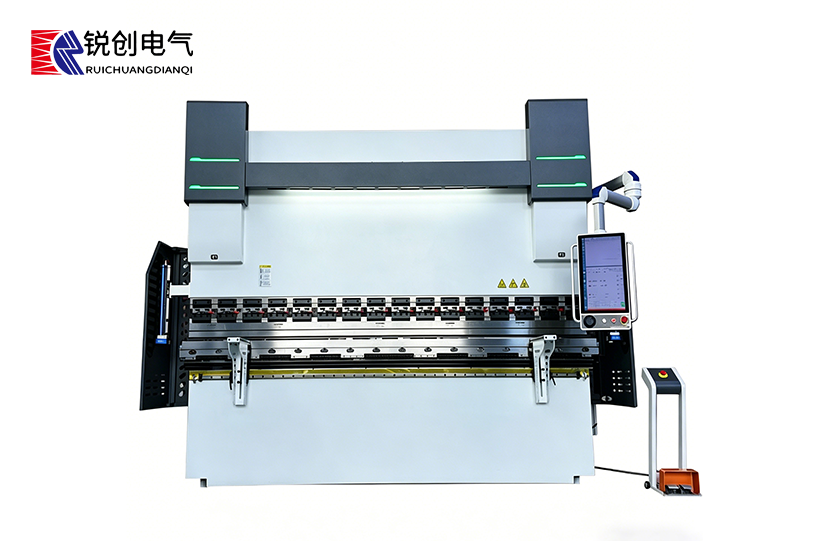
Hybrid Servo CNC Press Brake
Machine Type: Hybrid Servo CNC Press Brake
Drive System: Servo Motor + Hydraulic System
Bending Performance: High-Speed Operation with Stable Bending Force
Energy Efficiency: Reduced Power Consumption Compared with Traditional Hydraulic Systems
Processing Materials: Carbon Steel, Stainless Steel, Aluminum Sheets
Hybrid Servo CNC Press Brake: Precision Bending with Servo Hydraulic Efficiency
Hybrid Servo CNC Press Brake machines from Luoyang Ruichuang Electrical Equipment Co., Ltd. combine servo motor control with a hydraulic drive to deliver high bending force with significantly lower energy consumption. The servo pump is utilised only during the active bending cycle, reducing power consumption by 50-70% compared with constant speed hydraulic systems. Ram placement accuracy is ±0.01 mm with repeatability of ±0.005 mm, a practical solution for enterprises dealing with carbon steel, stainless steel, aluminium and galvanised sheet within a wide tonnage range.
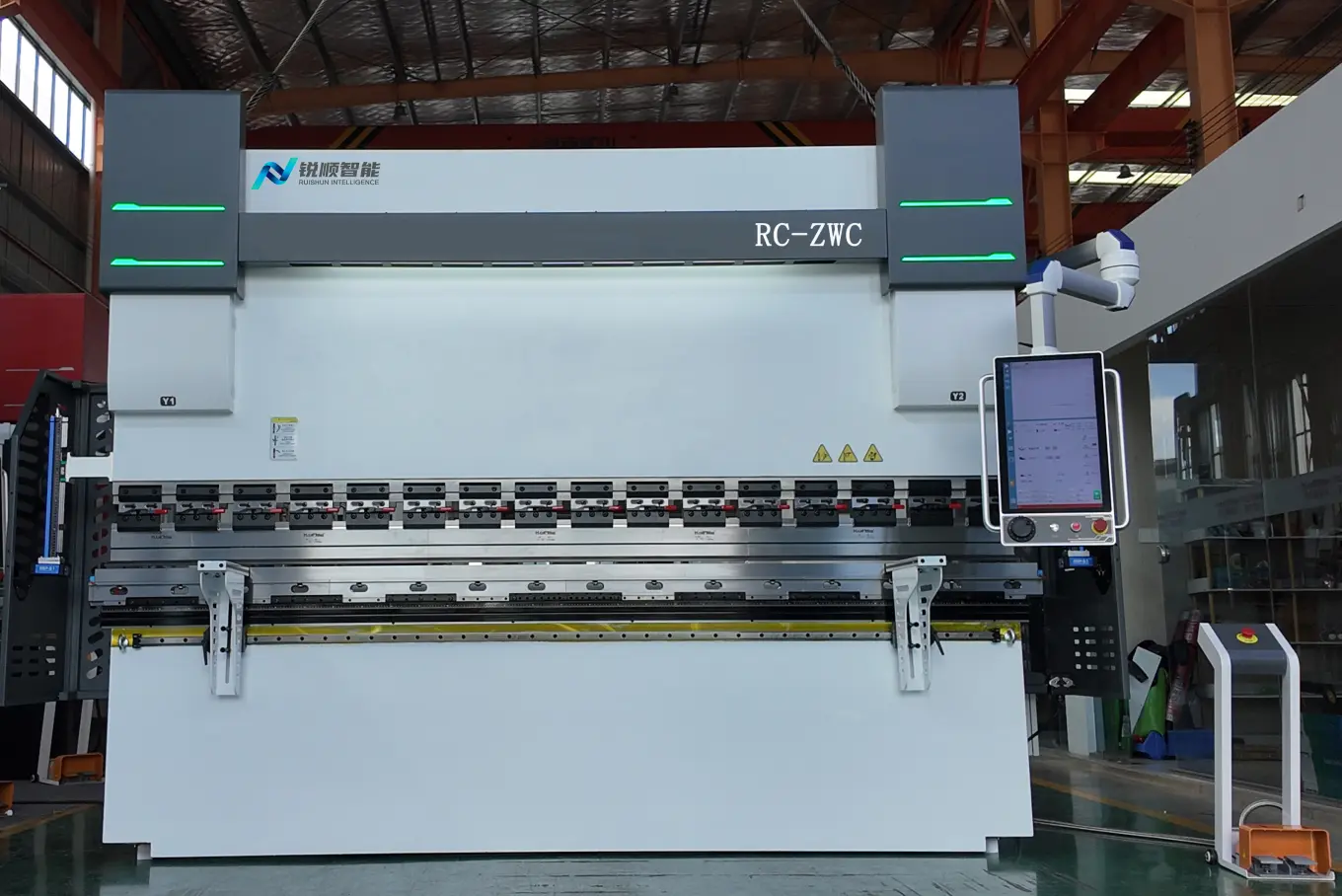
How the Hybrid Servo CNC Press Brake System Works
The machine has a high torque servo motor and a bi-directional hydraulic pump. The motor only runs while the ram is moving, not in standby or material loading. This on-demand design eliminates normal relief valves, and reduces oil volume by as much as 70 percent vs typical hydraulic circuits.
Less oil volume means less heat generation during operation. On a 100 tonne type the oil tank is less than 50 gallons and at operating temperature at full capacity less than 45 degrees C. This means less heat stress on the seals and hydraulic fluid, which leads to longer service intervals and no loss of productivity.
Key Technical Specifications
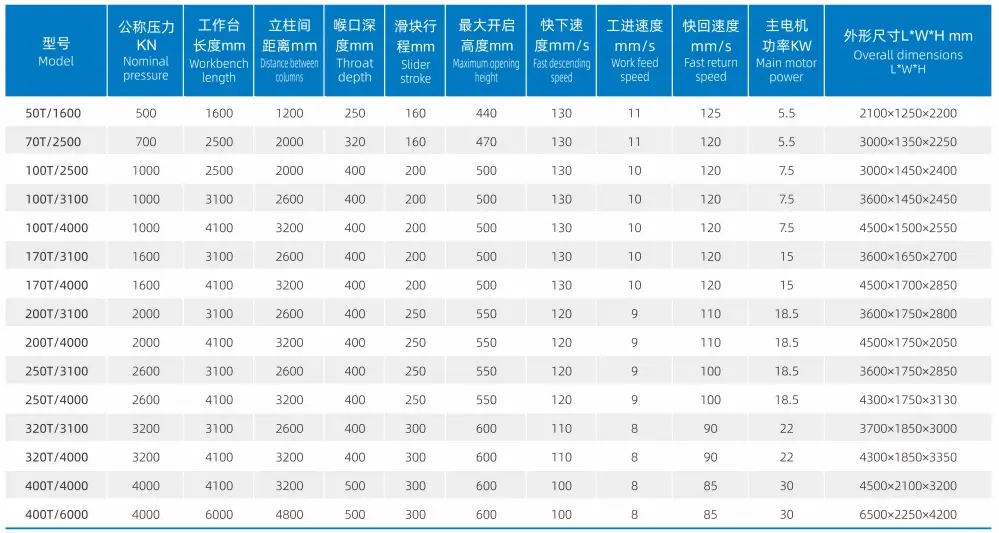
Core Product Advantages
Measurable energy savings. During the standby and loading of material, the servo motor consumes no power. This on-demand operation reduces power usage by 50-70% throughout a whole production shift compared to hydraulic machines at constant speed.
Angular precision uniform. High resolution linear encoders provide real-time tracking of ram position. Y1/Y2 Synchronisation ensures that both sides of the beam move at the same pace, even with off-center loads. V-axis crowning accounts for the bed deflection throughout the whole working length and maintains a consistent angle during the run.
Extended service intervals. Lower temperatures mean less degradation of hydraulic oil and seals. It has fewer hoses and valves than a standard hydraulic circuit hence less potential leak places to monitor.
Variety of weights & materials. The machine can process thin precision sheets and somewhat substantial structural plates without changing equipment between jobs. Tonnage from 40 tonnes to over 1,000 tonnes available for a broad range of industrial purposes.
Applications Across Industries
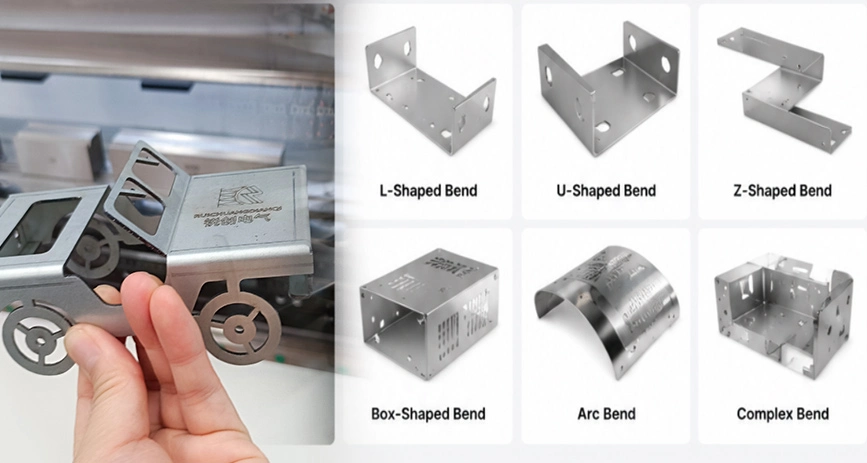
The Hybrid Servo CNC Press Brake is suited to production environments where both angular accuracy and cycle speed matter.
Electronics and server enclosures: The 200 mm/s approach speed enables high-volume runs of thin stainless steel and aluminium panels. Consistent angle output means less rework on precision sheet metal products.
Automotive structural parts: Chassis production requires high strength steel components, requiring consistent bending force with no hydraulic lag. The hybrid system keeps oil stable under continuous pressure and large cycle counts.
aircraft component forming Aluminium alloys for aircraft applications must have less thermal drift to maintain tight tolerances. This is supported by the low operating temperature and lower oil volume of this system.
General Fabrication & Metalworking The machine is capable of producing carbon steel enclosures, galvanised brackets and stainless steel coverings as standard.
Quality Control & Testing
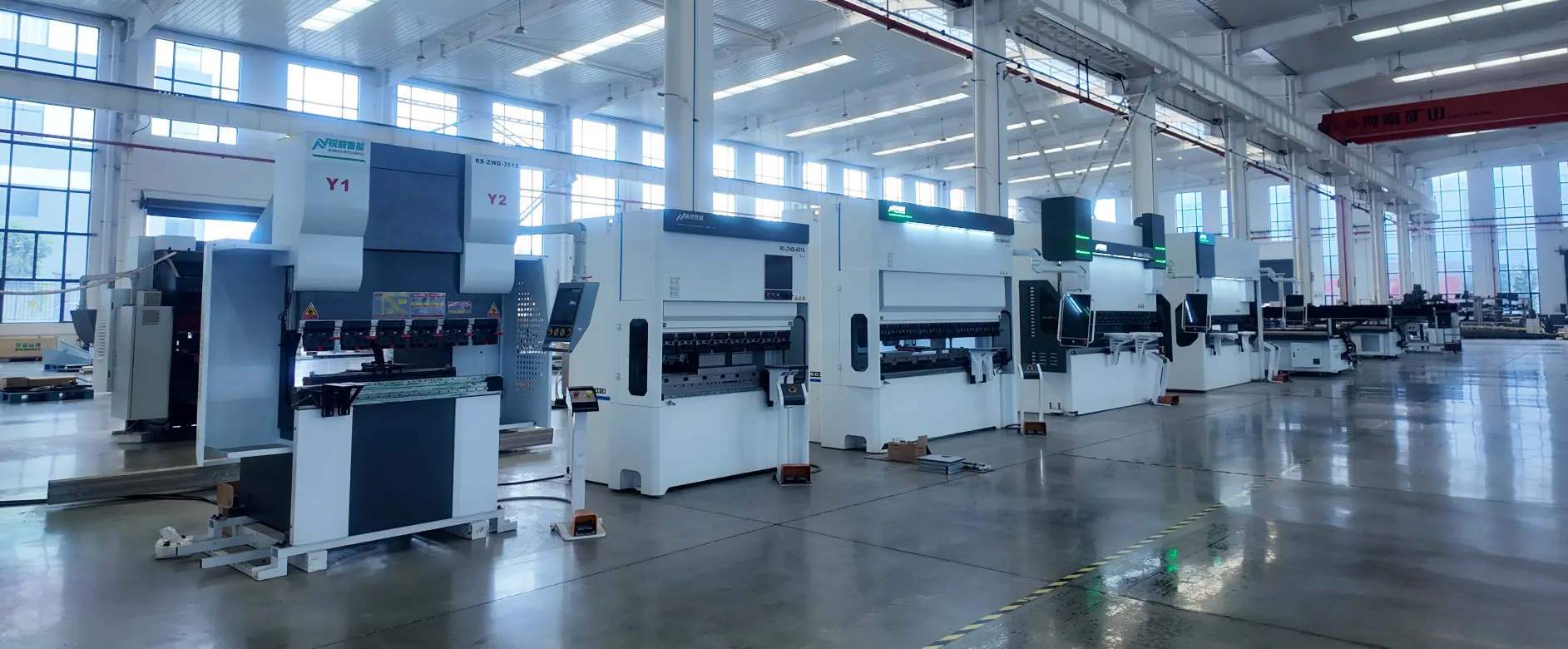
Before leaving the plant, each equipment gets a rigorous performance test.
The Y1/Y2 sync check is conducted under off center stress so that the two hydraulic cylinders track together within tolerance. The V-axis linearity test confirms crowning compensation across the whole bed length.
Hydraulic circuit is checked for high pressure leaks. Thermal stability - the machine is operated at maximum capacity to verify that the oil temperature does not exceed 45°C. The CNC controller is verified for the EtherCAT or CANopen protocol compliance, which verifies the communication between the servo drives and the hydraulic actuators.
Real-time adjustment for springback is verified by angle measurement. As standard, integrated laser safety guards are supplied complying with CE and ISO 12100.
CNC Control and Backgauge Options
The CNC system may enable multi-axis backgauge setup, angle correction and springback compensation. The choices provide the ability to implement complicated bending sequences and maintain angle correctness during extended production runs without needing to be manually corrected between sections.
The controller connects with servo drives using EtherCAT or CANopen protocols to provide constant ram motion profiles from first part to last.
Hybrid vs. Traditional Hydraulic vs. Full Electric
| Comparison Point | Traditional Hydraulic | Full Electric | Hybrid Servo |
|---|---|---|---|
| Energy Consumption | High | Low | Low (50–70% saving) |
| Maximum Tonnage | High | Limited | High (up to 1000+ tons) |
| Oil System Complexity | High | None | Simplified |
| Maintenance Frequency | Higher | Lower | Lower |
| Initial Investment | Lower | Highest | Mid-range |
FAQ
Q:What is the product?
A: That is the integrated hydraulic drive and servo motor control. The servo motor powers the hydraulic pump, which supplies oil only during the active bending cycle. It is a compromise between strong bending forces and low energy usage.
Q: How much energy does it save vs. a regular hydraulic machine?
A: The motor is only powered while the ram is moving. The energy consumption in standby and loaded is quite low. This may save power use by 50–70% throughout a complete shift compared with hydraulic systems that run at a constant pace.
Q: What is the benefit of it against the complete servo electric press brake?
A: The hybrid system provides more bending tonnage than most pure servo-electric designs, better suited for thicker structural plate work while yet providing equal energy saving qualities.
Q:What materials can it process?
A:The machine handles carbon steel, stainless steel, galvanized sheet, and aluminum. It balances positioning accuracy, approach speed, and bending force across this material range in a single configuration.
Q:Can it be equipped with a multi-axis CNC backgauge?
A:Yes. Multi-axis CNC backgauge, angle compensation, and springback compensation are all available options for applications requiring high repeat accuracy.
Q:Is the system harder to maintain because of the added electronics?
A:No. Fewer valves and hoses reduce the number of potential leak points compared with conventional hydraulic machines. The CNC system provides diagnostics for both electrical and hydraulic components, which simplifies fault identification.
Contact Us
Have a bending application to discuss with Hybrid Servo CNC Press Brake? Send your requirements or request a datasheet at sales@lyrcautomation.com — we're ready to help you find the right configuration.