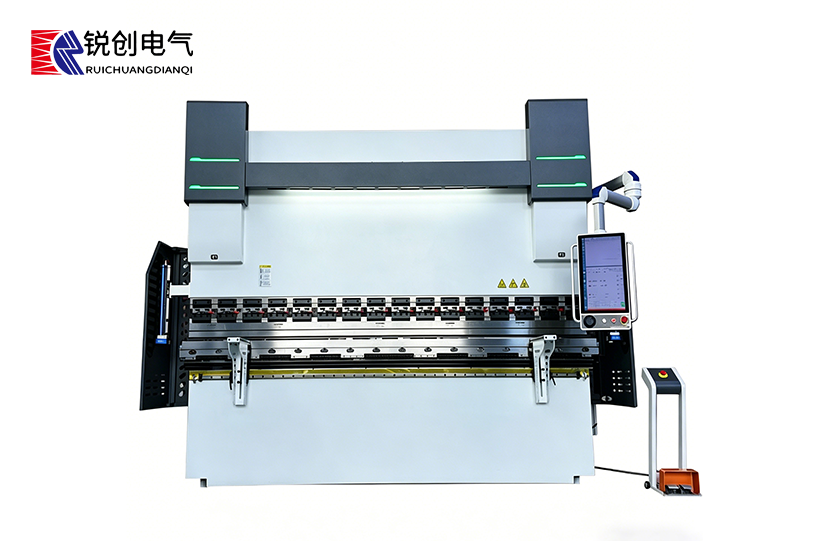
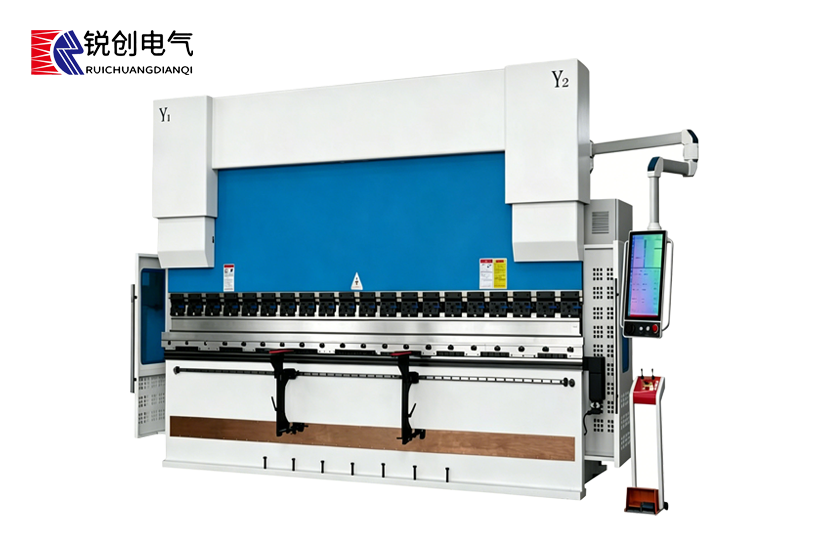
Hydraulic Press Brake
Machine Type: Hydraulic CNC Press Brake
Bending Force: Available from Medium to Heavy-Duty Applications
Control System: CNC Control System for Accurate Bending Operations
Processing Materials: Carbon Steel, Stainless Steel, Aluminum and Other Metal Sheets
Application Thickness: Suitable for Medium and Thick Metal Plates
Hydraulic Press Brake — CNC Bending Machine for Heavy-Duty Metal Fabrication
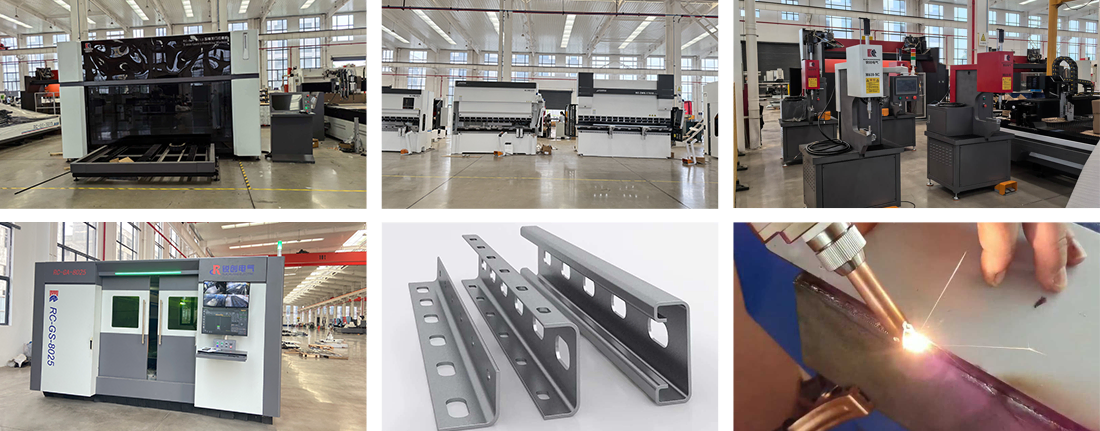
Hydraulic Press Brake machines from Luoyang Ruichuang are CNC bending systems built for carbon steel, stainless steel, aluminum, and galvanized sheet across medium to heavy-duty fabrication. The hydraulic system drives a punch into a fixed die with consistent force throughout the full stroke, while the CNC controller eliminates manual inconsistencies and supports multi-bend sequences. With manufacturing roots going back to 2002, these machines are a working option for sheet metal workshops and structural fabrication operations handling varied material types and thicknesses.
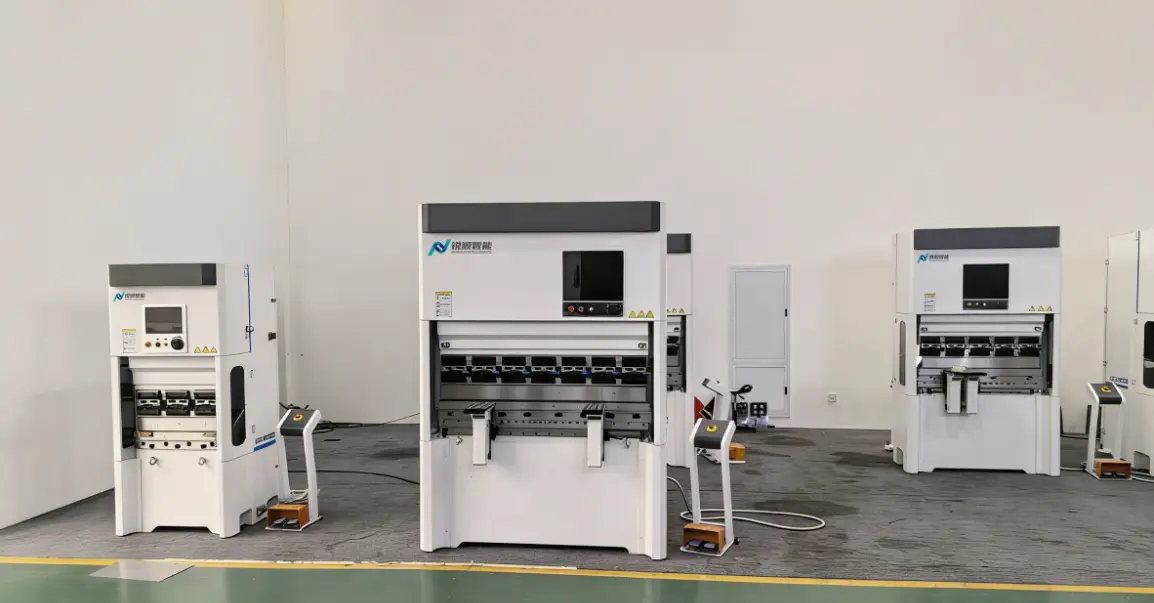
How the Hydraulic Press Brake Works
The machine forces a ram, which has a punch on it, down into a fixed die. The CNC system controls pressure and stroke length based on your programd parameters so that each bend is a repeatable operation rather than operator feel.
The product may provide full rated tonnage at any point in the stroke, unlike mechanical designs. This is important for bending thick plates or when changing between materials of differing yield strengths, since the force available doesn't go off as the ram approaches the die.
The Y1 and Y2 cylinders are synchronised using high-precision proportional valves to preserve ram parallelism within ±0.01mm. The constant parallelism assures the exactness of the angles of bending over the whole length of the workpiece. Deviations tend to accrue even on lengths more than 3,000 mm.
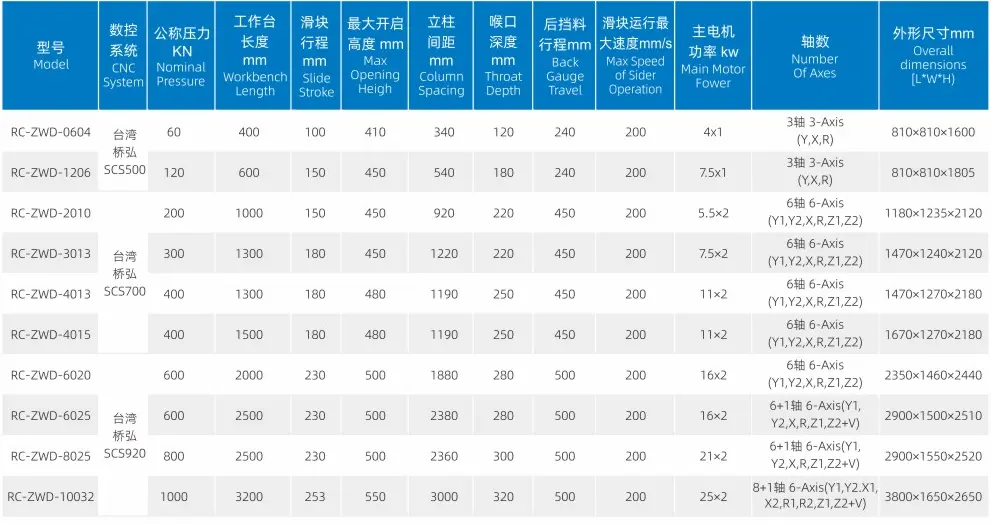
Key Technical Specifications
Product Advantages
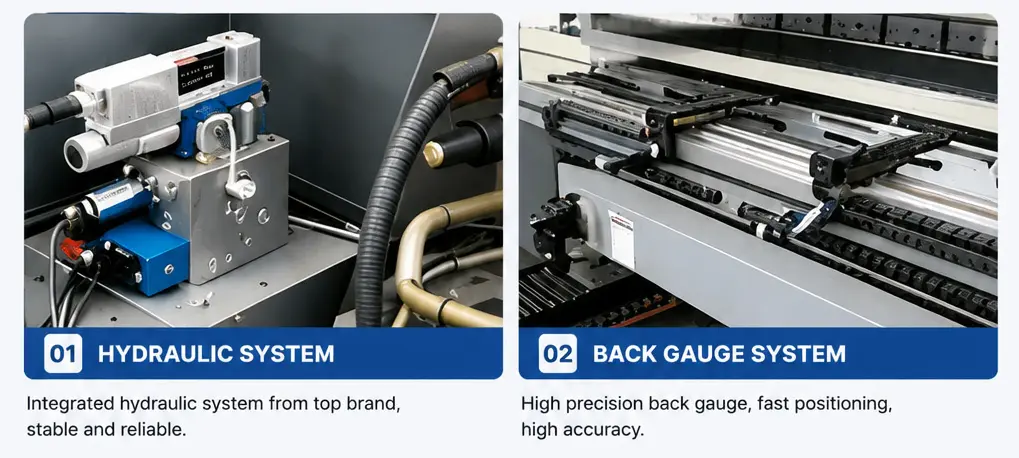
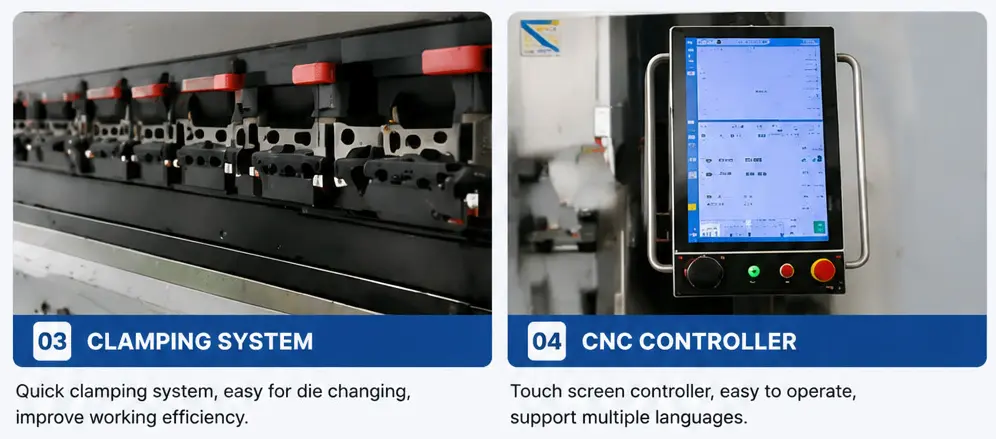
Consistent force throughout the stroke
The hydraulic system maintains full rated pressure from the start to the bottom of each bend. When working with thick steel plates, this means the bending force at mid-stroke matches the force at the end of travel — a property that mechanical designs do not share.
Straightforward maintenance
The mechanical structure follows a design that has been in production use for over two decades. Routine maintenance tasks — checking hydraulic fluid levels, inspecting seals, cleaning filters — can be handled by on-site technicians without specialist tooling.
CNC hydraulic crowning
Under load, the machine bed deflects slightly across its length. The CNC crowning system compensates for this deflection automatically, so the bend angle at the center of a long workpiece stays consistent with the angles at both ends.
Quick die change option
The upper and lower dies may be changed by the operator without extra equipment using a normal quick-clamp system. This cuts down on changeover time when switching from one component profile or customer task to another.
Materials of many types
The equipment can handle carbon steel, stainless steel, galvanised sheet and aluminium all in one set-up. Switching between these materials does not involve any substantial tooling adjustments and so is well suited to mixed production situations.
Lower initial cost than hybrid alternatives
Compared to hybrid or electro-hydraulic configurations, a hydraulic press brake has a lower purchase price while still covering the tonnage range needed for thick-plate fabrication work.
Application Industries
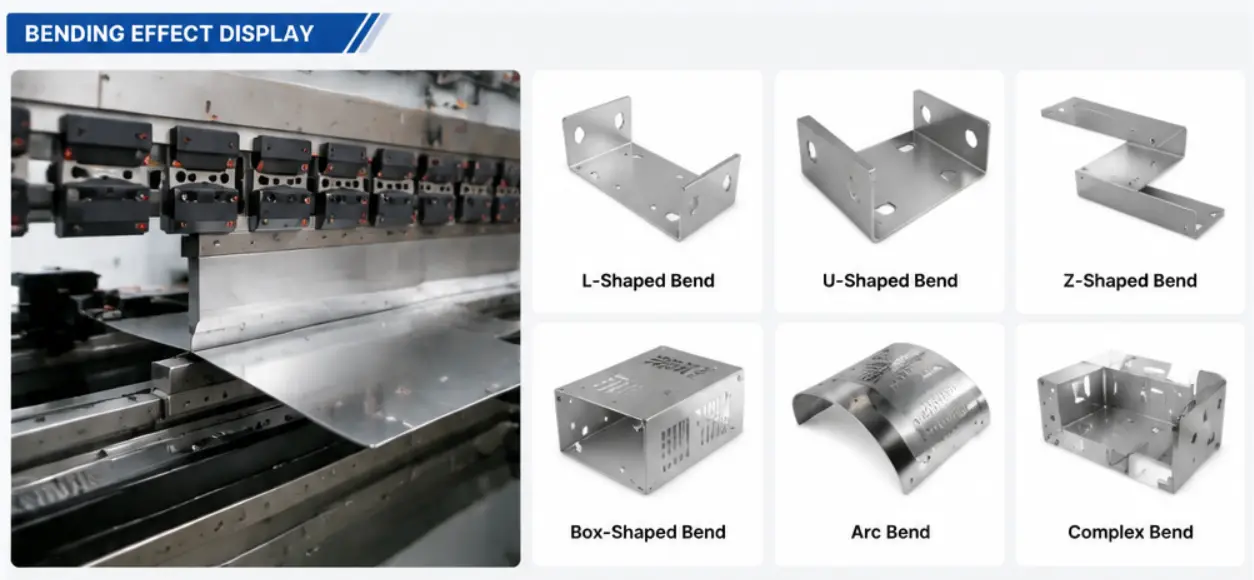
This machine is used by sheet metal fabrication factories for large volume bending of enclosures, brackets and panels across numerous material types where repeat accuracy across jobs is more critical than single part accuracy.
Manufacturers of electrical cabinets construct cabinet bodies from steel and stainless steel where angular tolerances and constant repeatability impact the fit of panels during assembly.
Heavy construction and infrastructure uses include structural steel sections, lift cabin panels and thick-plate HVAC ducting. These are tasks that have long duty cycles at plate thicknesses of 25mm and higher.
Automotive and transportation firms bend chassis components, structural brackets and trailer frames when the dimensional precision influences downstream assembly fit.
Steel structure manufacturers construct beams, angles and plate sections whose bending length may approach or surpass 6,000 mm, which puts extra demands on ram parallelism and crowning correction.
Quality Control Process
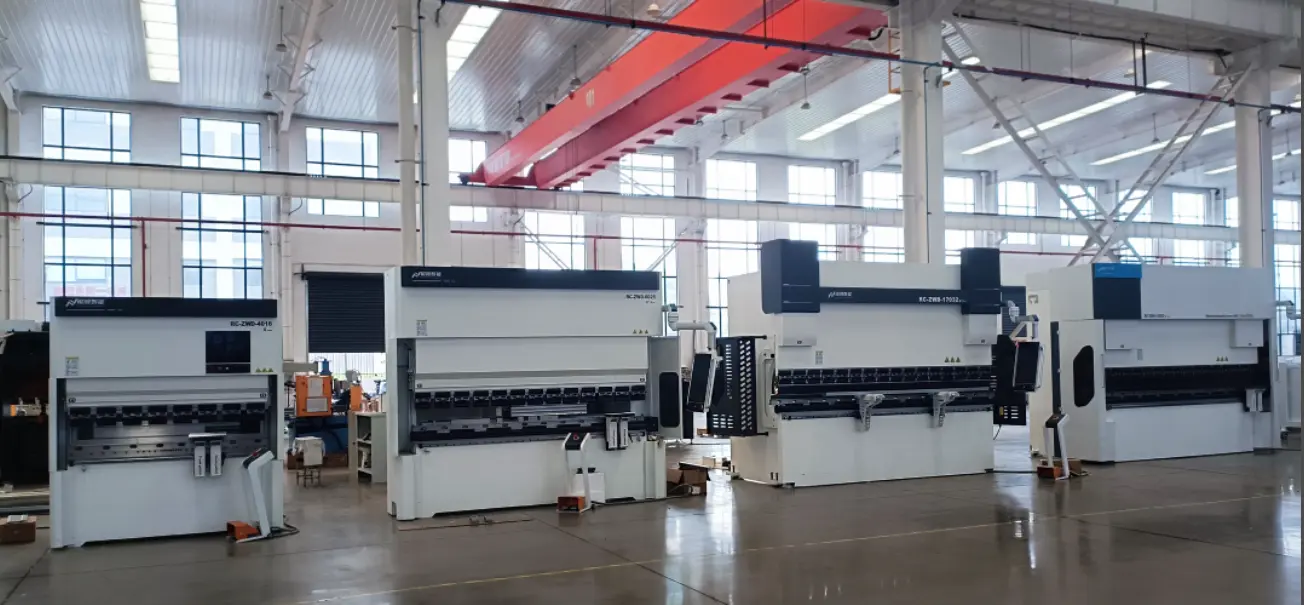
Each machine goes through five inspection stages before shipment:
- Ram parallelism and repeatability — Dial indicators verify Y1/Y2 cylinder synchronization within the specified tolerance.
- Backgauge positioning accuracy — X, R, and Z axes are tested for positioning precision and stability under repeated movement.
- Hydraulic pressure stability — The system runs a 24-hour load test covering pressure consistency, valve function, and seal integrity.
- Angular precision test — Bend angles are measured against CNC input values across multiple material thicknesses.
- Safety system validation — Light curtains, emergency stop circuits, and laser finger protection are tested for correct response before the machine is cleared for shipment.
Tonnage Calculation Guide
Use this standard formula as a starting point when selecting a model:
P = 650 × S² × L ÷ V
Where S = material thickness (mm), L = bending length (m), V = V-opening of the die (mm).
This gives a baseline tonnage figure. Actual requirements may vary depending on material grade and tooling geometry. If you want a more specific recommendation, send your material type, thickness range, and maximum workpiece length to info@lyrcmachine.com.
FAQ
Q:What materials can the product bend?
A:Carbon steel, stainless steel, galvanized sheet, and aluminum are the most common. These cover the majority of sheet metal fabrication requirements without changing the core machine setup.
Q:What is the maximum bending thickness and length?
A:This depends on the model's tonnage and working length. Available configurations range from compact machines to heavy-duty models handling plates over 25 mm thick and workpieces longer than 12,000 mm.
Q:What is the main advantage of the product over mechanical alternatives?
A:Full rated tonnage is available at any point in the stroke, not just at the bottom. This is particularly relevant when bending thick plate or materials with higher yield strength, where force availability affects the finished angle.
Q:Can bending dies be changed quickly?
A:Yes. The quick-clamp option lets operators install and remove upper and lower dies without special tools, reducing changeover time between different part profiles.
Q:Which industries use the products most often?
A:Sheet metal shops, electrical cabinet workshops, heavy equipment manufacturers, steel structure producers, and HVAC part fabricators are the most frequent users.
Q:How often should hydraulic oil be changed?
A:Every 2,000 to 4,000 operating hours is a general guideline, with variation depending on working conditions. Regular filter inspections should also be scheduled to prevent valve contamination over time.
Contact Us
Send your project requirements for Hydraulic Press Brake to sales@lyrcautomation.com and we will recommend a suitable configuration based on your material, thickness, and production needs.