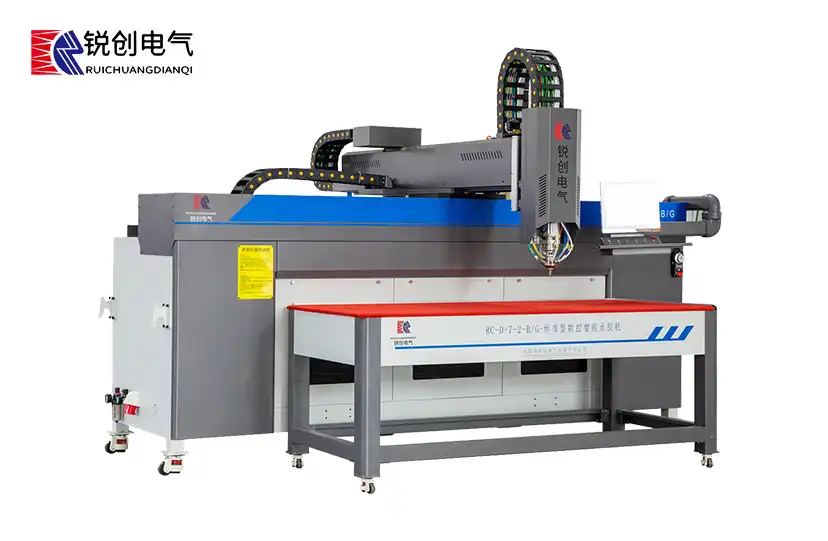
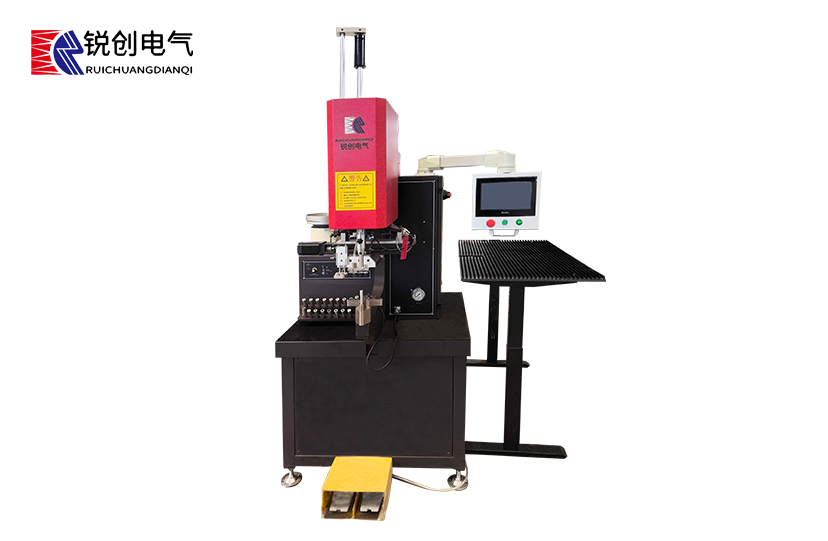
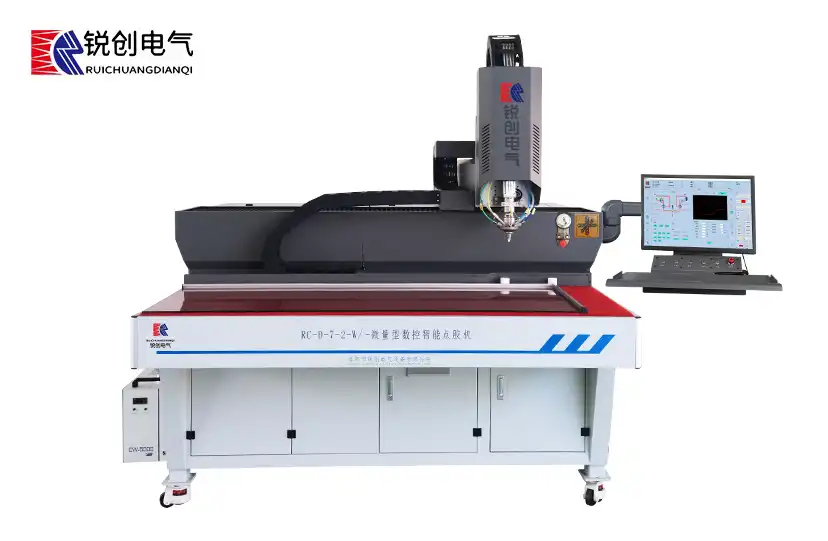
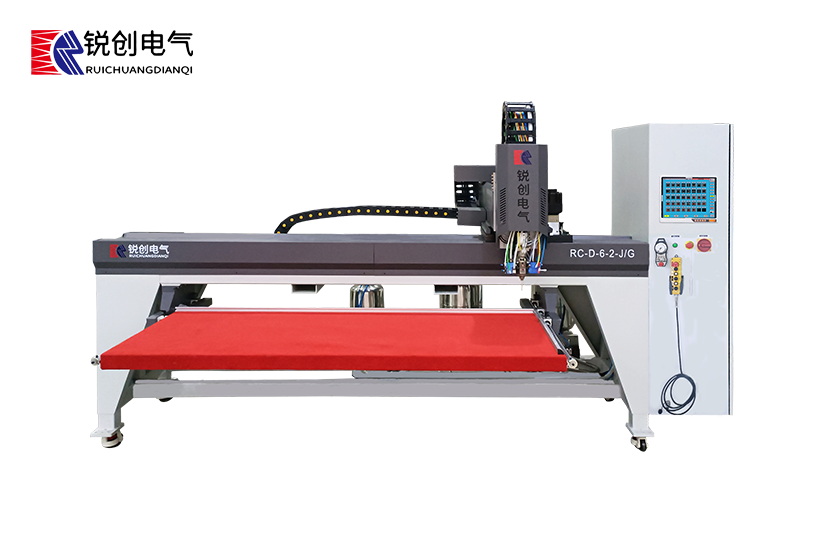
Electric Servo Insertion Machine
Machine Type: Servo Electric Insertion Machine
Drive System: High-Precision Servo Motor Drive
Control System: Intelligent CNC Control with Accurate Force and Position Control
Processing Capability: Precision Insertion and Assembly of Sheet Metal Components
Energy Efficiency: Low Energy Consumption with Clean Operation
Electric Servo Insertion Machine | Precision Press Insertion for Industrial Assembly
Electric Servo Insertion Machine systems from Luoyang Ruichuang Electrical Equipment Co., Ltd. use AC servo motor and ball screw technology to deliver closed-loop control of both force and position in every pressing cycle. Force precision is ±0.5% FS and position resolution is 0.001mm, which helps decrease scrap from irregular insertion force and prevents the blind-pressing issue typical in pneumatic and hydraulic installations. Ruichuang has been engaged in the industrial automation equipment industry since 2002.
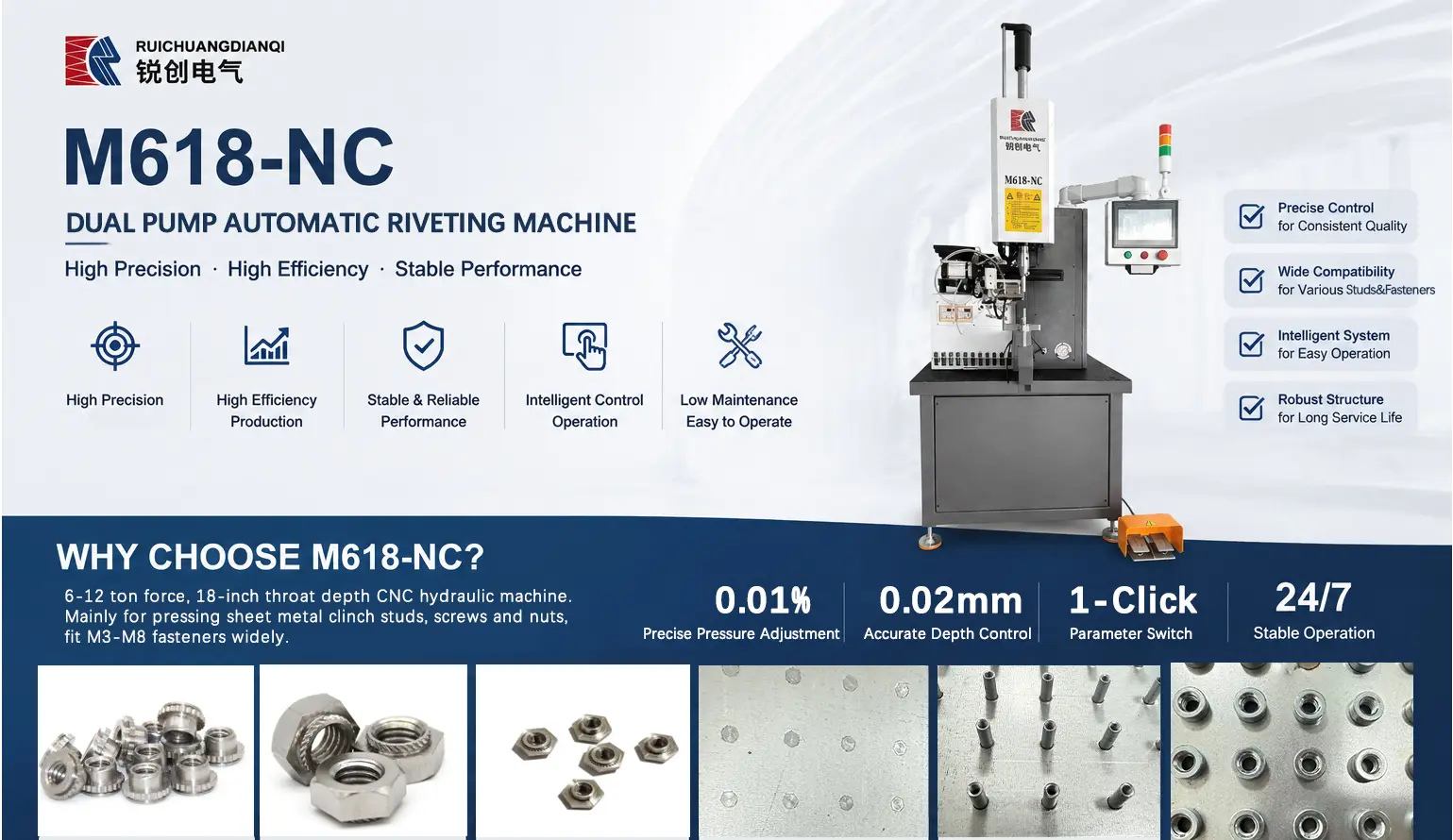
How an Electric Servo Insertion Machine Works
A servo insertion machine uses a precise ball screw to transform the motor's rotating output into regulated linear pressing force. Force and displacement are continually measured throughout each cycle using integrated load cells and encoders and sent back to the controller in real time.
This closed-loop design allows the machine to sense resistance changes on the sub-millimeter scale. If the pressing force at a certain place exceeds a pre-set limit, e.g. because a part is misaligned or deformed, the machine pauses automatically to avoid any damage.
Conversely, pneumatic systems are sensitive to supply pressure change and do not give accurate position feedback, limiting their use in situations where both insertion depth and force profile need to be regulated.
Key Performance Specifications
| Parameter | Value |
|---|---|
| Drive System | AC Servo Motor + Ball Screw |
| Force Accuracy | ±0.5% FS |
| Force Repeatability | ±0.5% to ±1% |
| Position Accuracy | ±0.01mm |
| Position Resolution | 0.001mm |
| Max Force Range | 50N (micro-electronics) to 200kN+ (heavy-duty) |
| Noise Level | Below 70dB |
| Energy Consumption | Up to 80% reduction vs. pneumatic systems |
| Control System | Intelligent CNC with multi-stage programmable stroke |
| Data Output | Force-displacement curve, OK/NG judgment, report export |
| Communication Protocols | OPC-UA, Ethernet/IP, Modbus |
The force range is wide – from 50N for small electronics work right through to 200kN+ for heavy-duty press-fit operations – so the same control platform can be used for multiple production scenarios without having to switch to a different machine class.
Benefits to performance
Closed loop force and position control
The servo system regulates independently pressing speed, force and position, in numerous stroke segments, in one cycle. A normal sequence may be a gentle touch phase, a regulated acceleration phase, and a final hold phase, each having its own parameters.
Integrated quality traceability and data logging
Every insertion cycle is automatically logged. The machine stores the force-displacement curve data, generates OK/NG judgement and exports the whole cycle report. This continuous logging meets quality audit criteria under IATF 16949 and equivalent standards without extra instrumentation.
Lower energy consumption and efficient functioning
No hydraulic oil, no chance of leaking, cleaner working environment. The servo motor is only used during the pressing operation itself, which reduces energy usage by up to 80% compared to comparable pneumatic solutions.
Low noise, low upkeep
The operating noise is less than 70dB. Routine maintenance is primarily ball screw lubrication and load cell calibration and is typically scheduled at 6- to 12-month intervals. No hydraulic circuits to check or service.
Industrial Communications Compatibility
The machine supports OPC-UA, Ethernet/IP and Modbus protocols which enables you to interface with existing MES and SCADA systems on your manufacturing line.
Application Scenarios
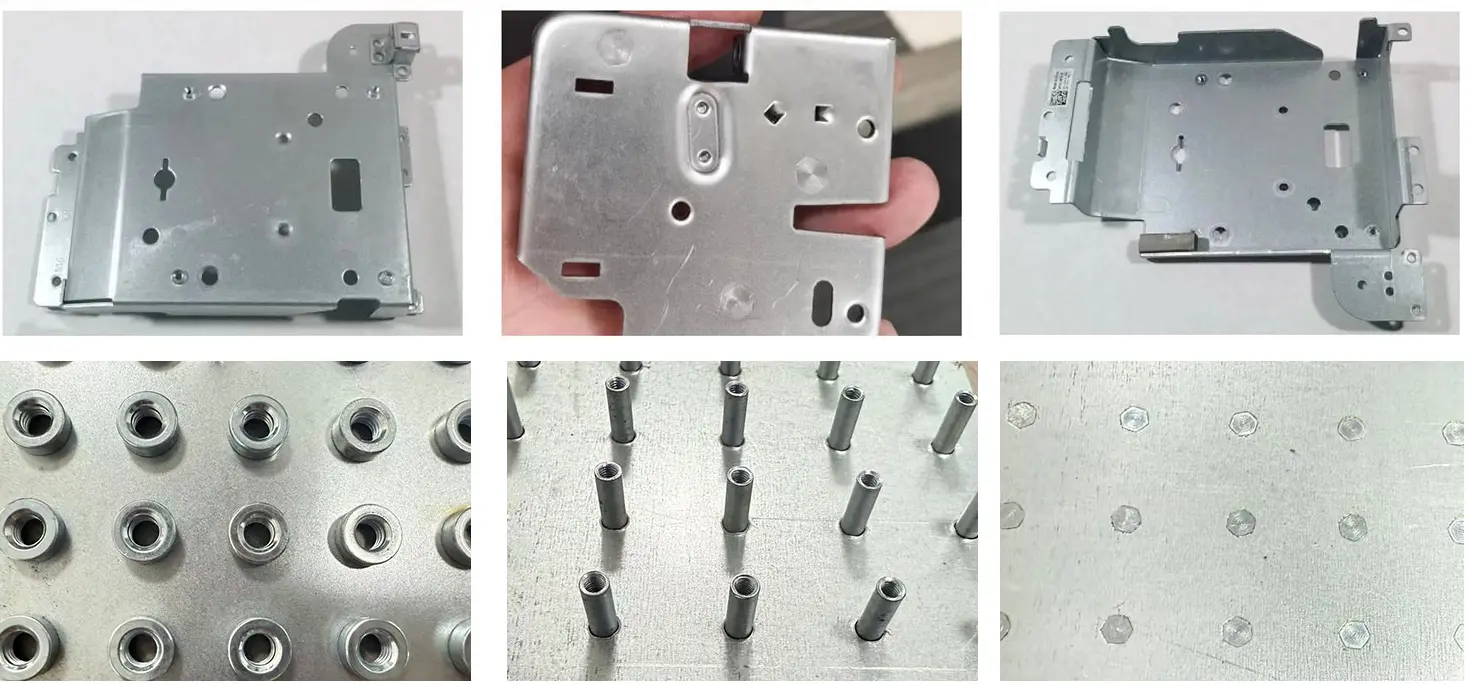
The Electric Servo Insertion Machine is used in assembly processes where insertion depth, force profile, and cycle-level traceability all need to be controlled together.
Automotive and EV power electronics
Connector insertion into EV inverter modules often demands sub-0.1mm positioning precision. Good control of the force used over the whole stroke assists in preserving the dimensional integrity of the constructed module.
Telecommunications backplanes
High speed PCB connections are inserted into multi-layer board architectures by pushing multiple pins at the same time in a press-fit operation. The programmable multistage stroke enables the force and speed to be individually set for the approach, seating and hold phases.
Medical diagnostic apparatus
Oil free operation and precise force restriction is required to assemble small sensors into precision housings without damaging fragile components. The servo system's dry, closed loop architecture satisfies both of those needs.
General precision assemblies
Common uses where both repeatable insertion depth and force recording are required include bearings, shafts, plastic inserts, and self-clinching fasteners for electronics and new energy applications.
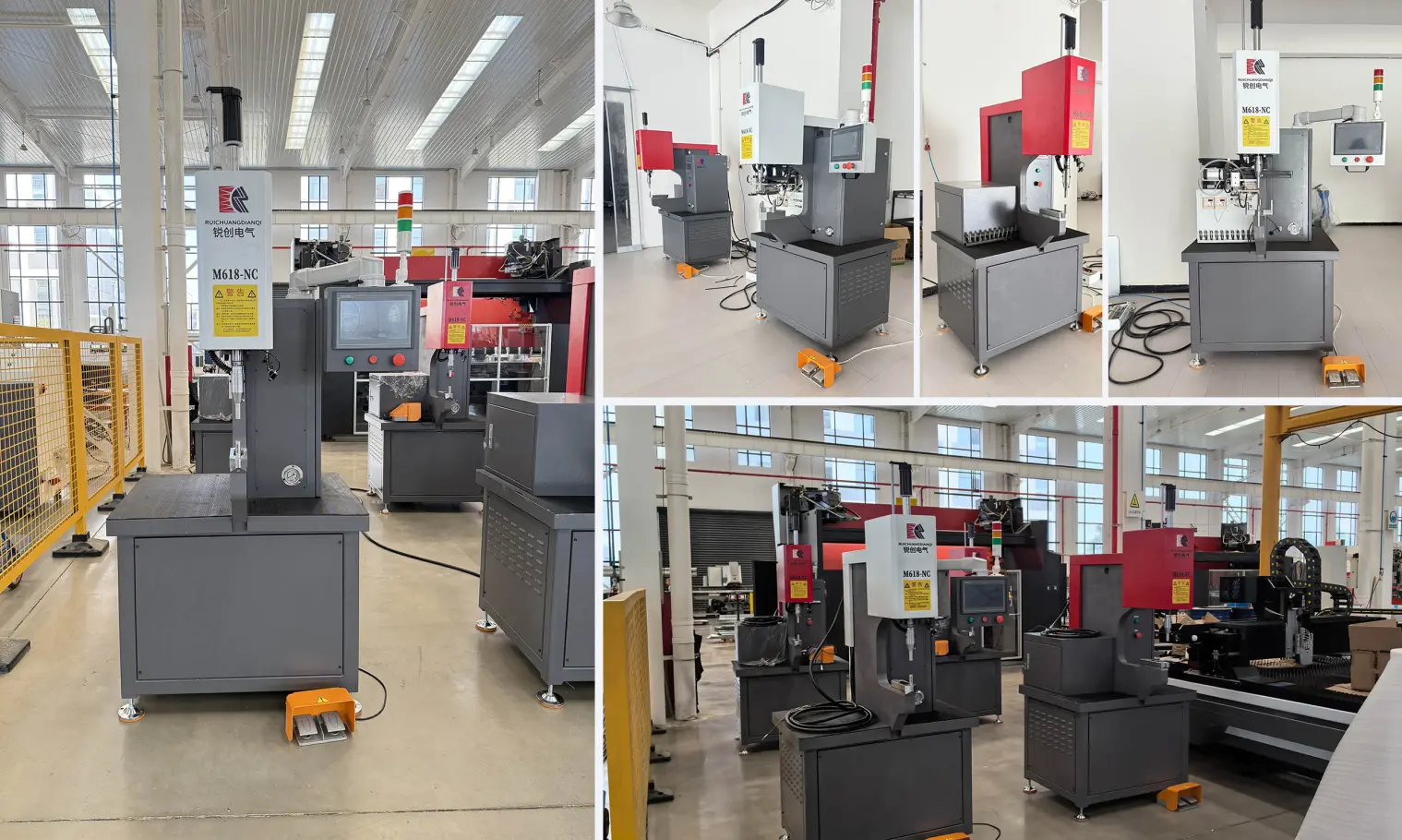
Quality & Compliance Support
The force-displacement curve recorded throughout each cycle is the main quality record. Important characteristics affecting curve dependability include load cell linearity, dynamic response speed and thermal stability in continuous operation.
The servo drive is intended to function during assembly without disturbing delicate electrical components. Also part of the pre-shipment inspection procedure is confirmation of the emergency stop reaction.
The machine's 100% cycle level data recording provides the audit trail required by IATF 16949 and other requirements for production lines operating to automotive or medical quality standards.
Customisation and Integration
The machine is designed to link to existing automation lines using conventional industrial protocols. The force range and stroke configuration may be customised to meet the individual needs of the components.
Ruichuang's engineering team provides installation, commissioning and technical training on site. The company’s Automation instruction Center also offers hands-on instruction in PLC programming and equipment operation to assist production personnel post-deployment.
FAQ
Q:What assembly work may a servo insertion machine be used for?
A: It can accurately insert bearings, shafts, connections, plastic inserts and self-clinching fasteners. Typical industries include electronic production, new energy equipment and automobile parts assembly.
Q:What are the force and position accuracy figures?
A:Force accuracy is ±0.5% FS. Position accuracy is ±0.01mm with a resolution of 0.001mm. Both are monitored and recorded in real time throughout every cycle.
Q:Does the machine log data and generate reports?
A:Yes. Force and displacement data are saved for every cycle. The machine outputs OK/NG judgments and can export curve reports for quality records and traceability purposes.
Q:Can pressing speed, force, and position be set independently?
A: Yeah. The whole pressing stroke may be subdivided into many parts, each of which has its own speed, force and position characteristics. This enables independent configuration of the approach, seating, and hold phase.
Q:What is the difference between servo insertion machine and hydraulic press?
A: The servo model utilises motor and ball screw. There is no hydraulic oil. It also allows closed-loop control of pressing force, position and velocity. This leads to cleaner operation and more accurate, reproducible outcomes than with hydraulic systems, which are harder to correctly position-control.
Q: What maintenance does the equipment need?
A: Routine maintenance includes ball screw lubrication and load cell calibration, usually done every 6 to 12 months. There are no hydraulics to maintain.
Contact Us
For specifications, configuration questions, or a custom quote on the Electric Servo Insertion Machine, reach our team at sales@lyrcautomation.com and we will follow up directly.