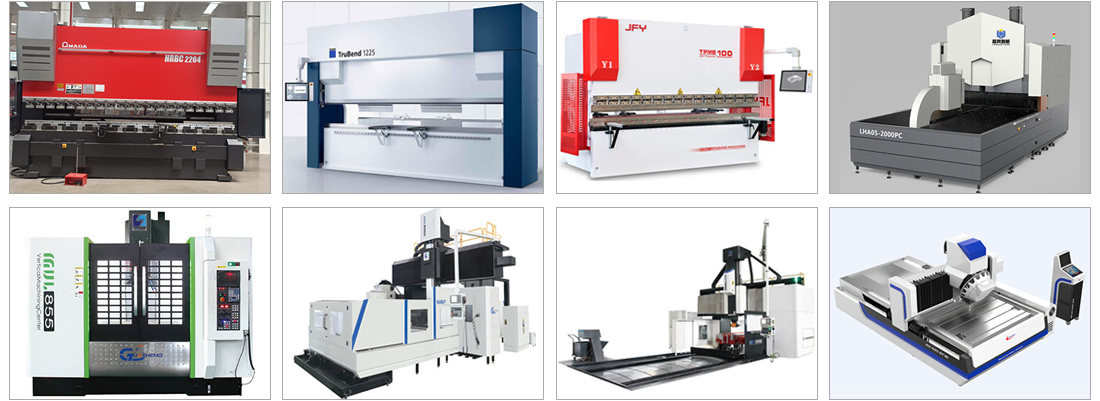
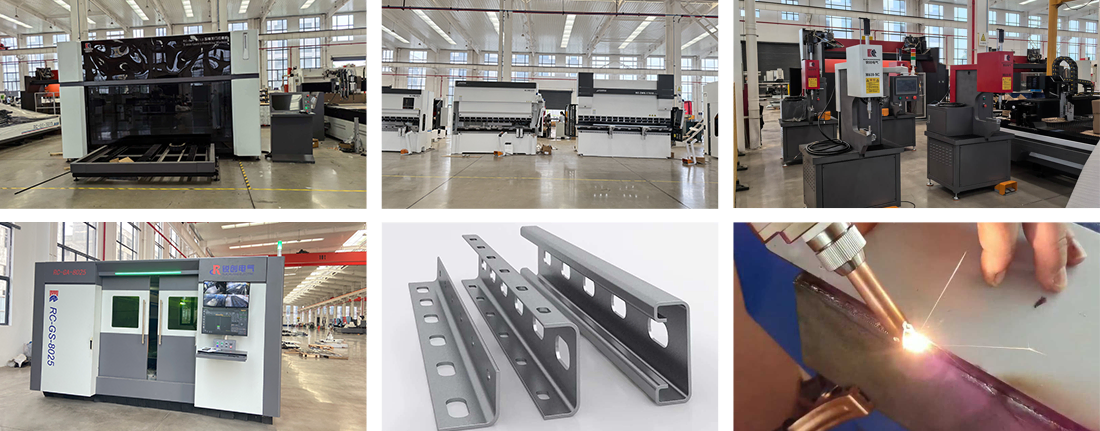
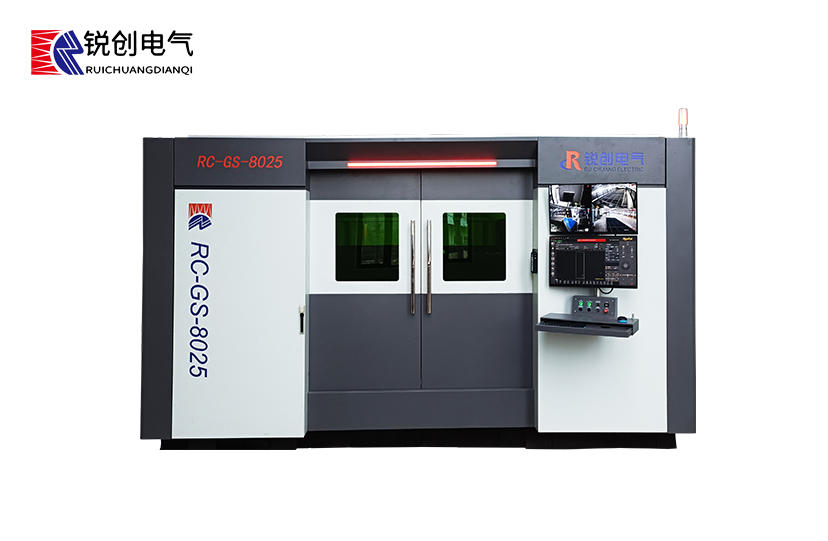
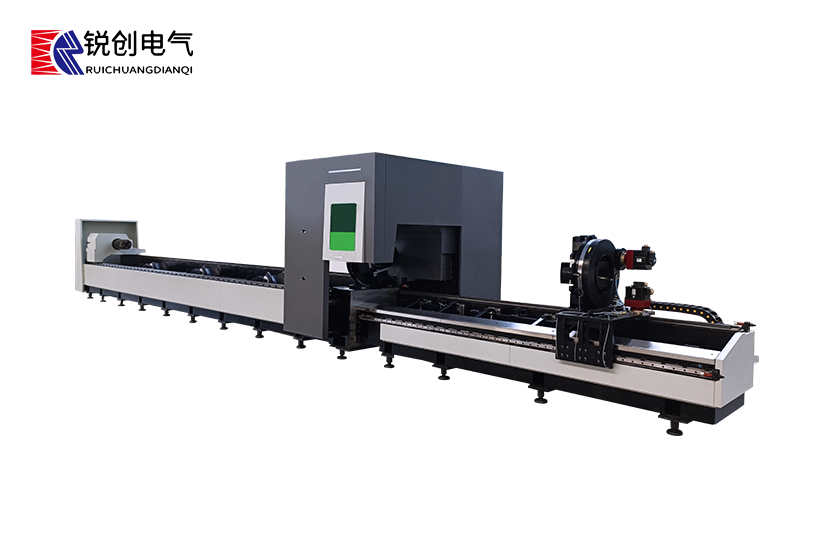
Plate Laser Cutting Machine
Cutting Materials: Carbon Steel Plates, Stainless Steel Plates, Aluminum Plates
Plate Thickness: Suitable for Medium and Thick Metal Plates
Working Area: Customized According to Production Requirements
Laser Power: Available for Different Cutting Thicknesses
Cutting Accuracy: High Precision CNC Controlled Cutting
Plate Laser Cutting Machine for Metal Sheet Fabrication
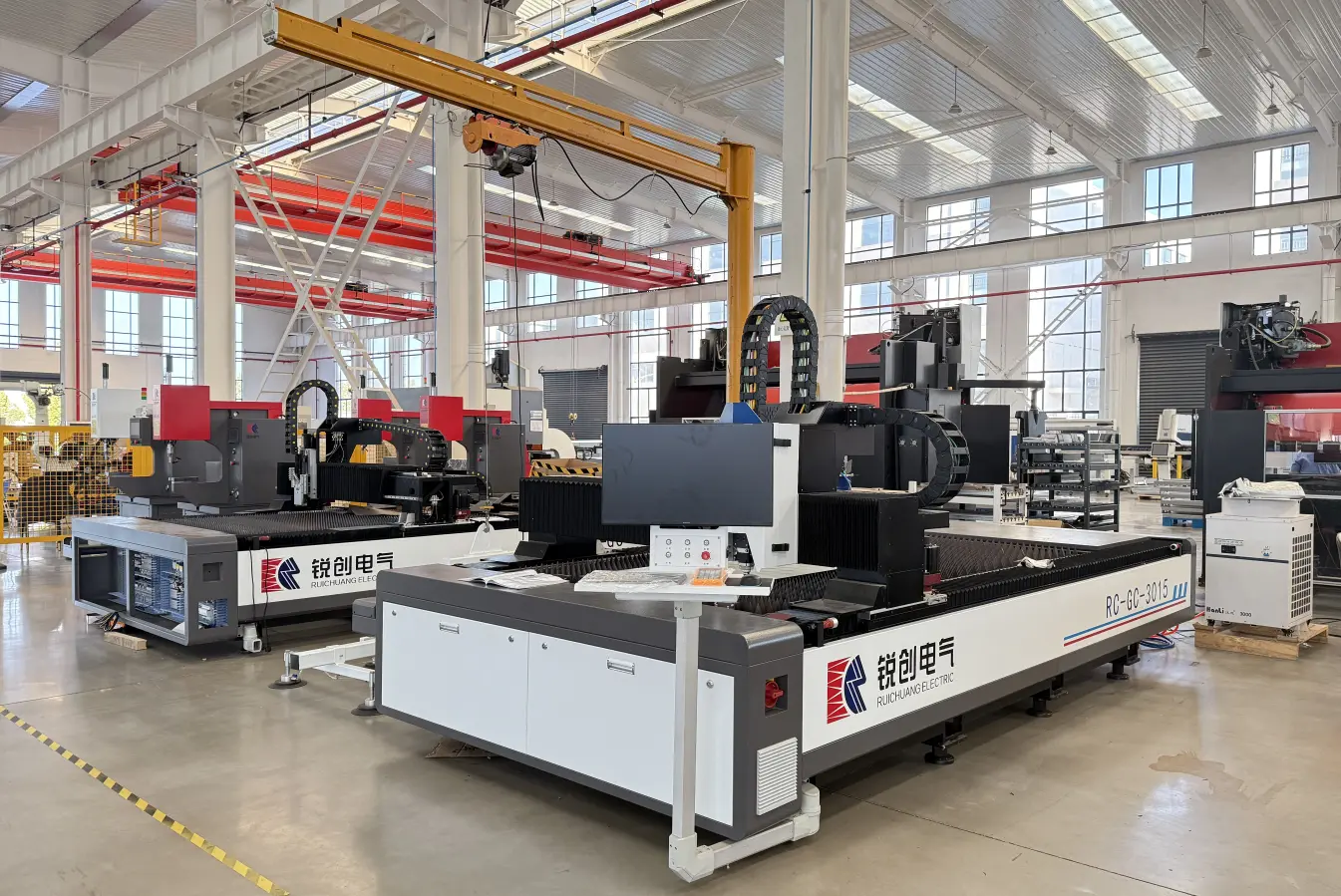
Ruichuang's plate laser cutting machine is built for industrial metal sheet processing, operating at a 1064 nm fiber laser wavelength with positioning accuracy up to ±0.03 mm/m and linkage speeds exceeding 120 m/min. The technology can handle carbon steel, stainless steel, aluminium alloy and brass in a wide range of thicknesses. Work tables are very adaptable, typical combinations include 3015, 4020 and 6020. Based on our in-house knowledge of motion control, electrical engineering and software development, Ruichuang has been developing CNC integrated laser equipment since 2002.
What Is a Plate Laser Cutting Machine?
The product is a CNC industrial device that melts or vaporizes flat metal sheet materials using a concentrated, high power density fiber laser beam. This procedure allows for accurate separation without physical touch, thus there is no tooling wear and no need for cutting dies.
Fibre laser cutting has a much smaller heat affected zone (HAZ) than plasma or oxy-fuel cutting. This provides less edge distortion and maintains dimensional accuracy on complex contour shapes.
The CAD/CAM software and motion control system together allow for a simple switch from one part design to another by changing a file, rather than changing physical tooling, making this machine appropriate for short-run prototype and continuous production.
Key Technical Parameters
| Parameter | Specification |
|---|---|
| Laser Type | Fiber Laser (1064 nm wavelength) |
| Laser Power Range | 1 kW – 60 kW+ |
| Positioning Accuracy | ±0.03 mm/m |
| Max Linkage Speed | >120 m/min |
| Cutting Materials | Carbon Steel, Stainless Steel, Aluminum Alloy, Brass |
| Working Table Size | Customizable (3015 / 4020 / 6020 standard formats) |
| Electro-Optical Efficiency | 35–40% |
| Thick Plate Capability | 20 mm–50 mm+ (high-power configurations) |
| Laser Source Lifespan | ~100,000 hours |
| Control System | CNC with CAD/CAM integration |
| Auxiliary Gas | Oxygen / Nitrogen (application-dependent) |
| Machine Bed | Stress-relieved welded steel or cast iron |
Core Advantages for Sheet Metal Production
Designed for flat plate processing. Rigidity and thermal stability are important components of the machine structure to allow daily continuous operation in the factory for the production of cabinets, enclosures, structural panels and fabricated parts.
Customisable workspace. Table sizes are according to your production arrangement Typical alternatives like 4020 and 6020 satisfy most of the industrial footprint needs.
Less post-processing, clean cut edges. Most applications have minimum dross and do not need secondary edge grinding, which decreases the labour time in the downstream manufacturing sequence.
No die cutting equipment required. Part geometry changeovers are made via file change not a change of a physical die. This reduces tooling cost and changeover time.
Nesting software minimises material waste. Includes built-in nesting tools to optimise cut layouts for maximising sheet use and minimising per-part material cost.
Automated material handling optional. The loading and unloading system can be retrofitted as an add-on to reduce manual handling and increase shift throughput.
Industry Applications
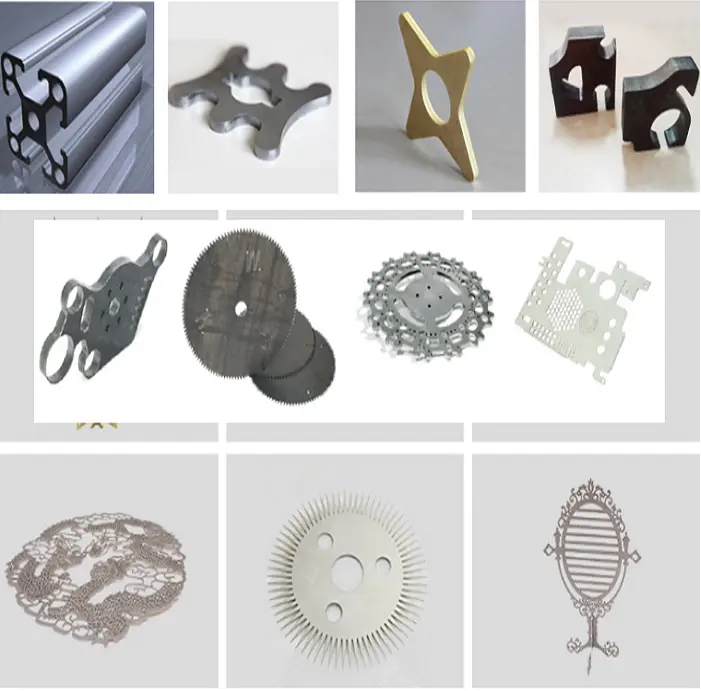
Typical applications include the construction of electrical cabinets and housings. Consistent hole position, clean edges on the panels and correct measurements on brackets all help to minimise rework during downstream assembly.
Aerospace and automotive industries need cutting of high strength alloys and aluminium plates where repeatable dimensional accuracy is critical . Complex bracket profiles with low burr finishes are achieved by using fibre laser cutting.
Heavy equipment and construction means thick carbon steel in the 20 mm to 50 mm range. High power arrangements are needed to penetrate to the depths required for structural items such as crane booms and chassis components.
A excellent surface quality on stainless steel is critical for the manufacture of lifts and cookware. The use of nitrogen as a shield gas results in a sharp cut edge usually free from oxidation and requiring little or no grinding after welding.
Dual-temperature chillers of Plate Laser Cutting Machine protect optical components across all these environments, maintaining stable beam quality during extended production runs.

Quality Control Process
Each machine is verified in a prescribed multi-stage procedure before dispatch.
Laser interferometer calibration ensures linear positioning accuracy, adjusts for pitch inaccuracy. X-Y axis circularity and geometric squareness testing. Gantry motion consistency. These measures ensure the equipment is working to spec before it leaves the plant.
The 72-hour high-speed ageing test exposes the gantry and motor drivers under working load to find any mechanical or electrical problems before shipping. The quality of the cut section is measured by evaluating dross adherence, kerf width and dimensions of the heat impacted zone.
Integrated sensors monitor the state of the protective window of the cutting head and the auxiliary gas pressure. These link to the machine's diagnostic software, flagging output drift during production. Dimensional tolerances and surface roughness objectives are in accordance to ISO 9013 standard for thermal cutting.
Smart factoriescompatibility
The machine supports OPC-UA communication protocols and may be integrated into MES settings. Compatible monitoring interfaces provide access to real time production data.
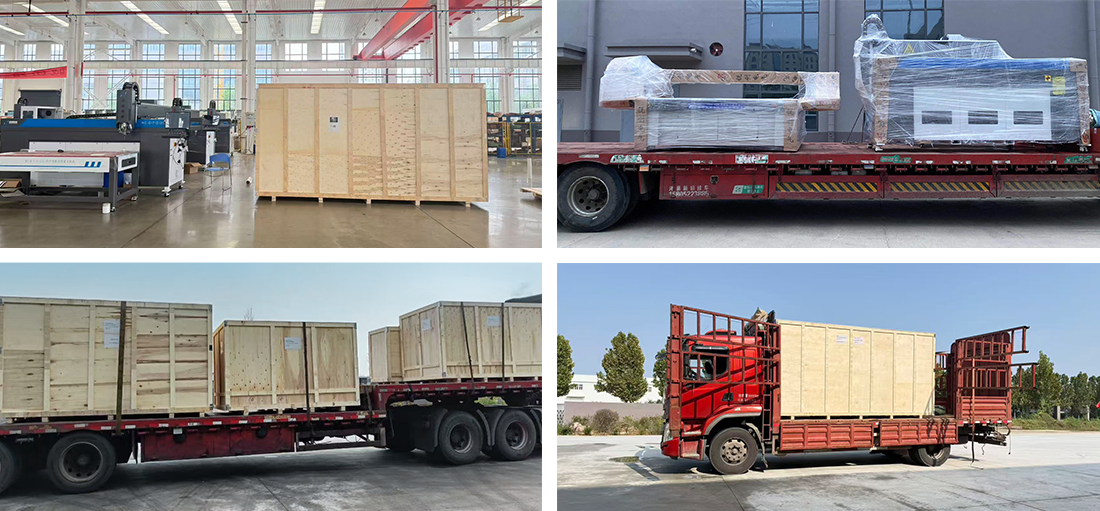
Automated loading and unloading systems can be integrated as part of the machine configuration. Ruichuang provides integration support for customers building connected production lines.
FAQ
Q:What maximum sheet size can this machine handle?
A:The working table is fully customizable. Standard sizes 3015, 4020, and 6020 are available, and other dimensions can be configured based on your facility layout.
Q:Is automatic loading and unloading available?
A:Yes, as an optional add-on. It reduces manual handling and improves throughput in high-volume production shifts.
Q:Will thick plates deform during cutting?
A:The stress-relieved bed structure and optimized cutting parameters reduce thermal deformation. High-power thick-plate cutting uses specific parameter control to minimize heat input and maintain part dimensions.
Q:What does the cut edge look like after processing?
A:For most cabinet, enclosure, and structural applications, the edge is clean with minimal dross and does not require secondary polishing.
Q:Can the same machine handle both thin sheet and thick plate?
A:Yes. Laser power, cutting speed, and auxiliary gas type are adjusted to match the material and thickness being cut.
Q:How does fiber laser cutting differ from CO2 laser cutting?
A:Fiber lasers operate at 1064 nm wavelength and offer higher wall-plug efficiency and lower maintenance requirements for metal cutting compared to CO2 technology. CO2 lasers are more commonly used for non-metal materials.
Contact Us
Send your material specs and project requirements to sales@lyrcautomation.com. Our team will review your application for Plate Laser Cutting Machine and respond with relevant configuration options.